
- TikTok Users Try To Sabotage Trump’s Rally Attendance—Again Forbes
- Trump says he will pressure governors to reopen schools as virus surges CNN
- Three questions surround Trump’s N.H. rally this Saturday The Boston Globe
- Trump Promises To Pressure Governors To Reopen Schools Forbes
- Trump pushes country to fully open: “We’ll never close” CNN
- View Full Coverage on Google News
- Trump heads to U.S. military’s Southern Command in Florida as coronavirus cases surge CNBC
- Fact-checking Trump’s claims that US coronavirus death rate is the lowest worldwide CNN
- Trump pushes schools to open in the fall, downplaying risks as virus spreads The Washington Post
- Trump heads to coronavirus-hit Florida to talk about drug smuggling NOT the public health crisis Daily Mail
- Trump says he will “put pressure on governors” to reopen schools CNN
- View Full Coverage on Google News
It will take personal sustainability to meet the global challenges we face
Chris Gaither
Mon, 07/06/2020 – 02:15
Earth Day, when we remember the planet’s fragility and resilience, was when I finally understood that I had nothing left to give.
It was April 2017. After two decades of striving in my career, I had risen to a role of great impact: a director on Apple’s Environment, Policy and Social Initiatives team. My boss, former EPA Administrator Lisa Jackson, had entrusted me with orchestrating the company’s annual Earth Day celebration.
And, wow, had we stepped up our game that year.
We released a 58-page environmental responsibility report and a series of animated videos about Apple’s environmental achievements, posing curious questions such as “Do solar farms feed yaks?” We turned the leaf on our logo green at hundreds of Apple stores around the world. Even bolder, we announced ambitions to make Apple products out of entirely recycled or renewable materials.
I drank beer and hugged the brilliant people from so many Apple teams who had pulled all of this off. I smiled. But mostly, I wanted to fall into bed.
To inspire Apple employees, we created an hour-long presentation for Lisa to deliver in Town Hall, the campus theater where the first iPhone was announced. And we brought musician Jason Mraz to play an Earth Day concert on the green lawns of One Infinite Loop.
Whew. Surrounded by thousands of my colleagues as Mraz performed, I drank beer and hugged the brilliant people from so many Apple teams who had pulled all of this off. I smiled. But mostly, I wanted to fall into bed.
Insistent inner voice
That wasn’t new. The enormity of my job, leading strategy and engagement for Lisa’s team, usually left me exhausted — especially after Earth Day, when I felt like one of Santa’s elves just after Christmas.
What was different? This time, when I told myself I’d bounce back soon, I knew I was lying. Underneath my sheen of accomplishment and pride, a quiet and insistent inner voice told me I was depleted. Cooked. Burned out.
That voice was right. As May deepened, so did my sadness and fatigue. The physical and emotional crisis overwhelmed me. Nearly every day, I sat in my glass-walled office and tried to avoid eye contact with my colleagues so they wouldn’t see my tears.
I felt like I was failing at everything. I couldn’t gain any momentum on projects. My well of creative energy had run dry.
My body no longer allowed me to pretend that this hard-charging life was right for me. Previous injuries flared up, sending lightning bolts of pain along the nerves in my hands, feet and back.
As I tried to ignore the pain, my body kept turning up the volume: a 3 out of 10, then a 4, then a 7. My body seemed to be asking, “Can you hear me now?”
The pain reached a 10 that spring of 2017. And still I tried to soldier on.
Don’t be an idiot, I told myself. Your boss served President Barack Obama, and now she reports to Tim Cook. You have a wonderful team. You have a great title and lots of stock in the world’s most valuable company. Even better, you get to tell stories of the powerful work Apple is doing on climate action, resource conservation, natural-disaster relief and HIV prevention. You show others what’s possible. You become what Robert Kennedy (whose photo hangs on the wall of Tim’s office, alongside Martin Luther King Jr.’s) called a “ripple of hope,” spreading inspiration through customers, investors, suppliers, policymakers and industry.
Listening to your spirit
So what if you feel down? Most people would kill for this job. Suck it up.
Here’s the thing: You can’t think your way through an existential crisis. You can’t talk your way out of burnout. You need to listen, deeply, to your spirit. You need to honor what it’s telling you.
And my spirit was telling me something profound: For the previous few years, I’d devoted myself to corporate and planetary sustainability. But along the way, I’d completely lost my human sustainability.
Only when I hit the depths of my crisis did I understand that I needed to quit the job I’d worked so hard to get.
Only when I hit the depths of my crisis did I understand that I needed to quit the job I’d worked so hard to get. I’d let the burnout go for so long that stepping off the corporate treadmill was the only way I could truly recuperate from the punishment of two decades of high-stress work, long commutes, poor health habits and time away from my family.
So that’s what I did. I sat across from Lisa in her office, swallowed hard past the lump in my throat and told her I was leaving to recover my well-being.
It was one of the hardest things I’ve ever done, and I haven’t regretted it for a moment. In the three years since, I’ve come back to life. I’ve gotten well. I’ve crafted a career of purpose and meaning. I’m an executive coach who helps leaders — especially environmental sustainability leaders — nourish and inspire themselves so they can keep doing the work they love.
Why am I telling you this story? Because, my friends, I see myself in you.
I see you suffering under the weight of the environmental crisis.
I see you struggling with weariness, depression and burnout.
I see you decide you can’t take a day off when the planet is burning.
I see you sacrifice your own sustainability for planetary sustainability.
I get it. You keep going because you have a big heart. You’re called to do this work, maybe by your love of wildlife or natural places, or by a deep desire for racial and economic equality.
The problem is, if you don’t take care of yourself, you won’t have the energy or creativity that you need to do great work.
And great work, maybe even transcendent work, is critical right now.
That’s why I’m starting this series with GreenBiz. I’ll be writing regularly about ways you can tend to your human sustainability. Purpose. Love. Natural beauty. Breath. Poetry. Stillness. Rest. I’ll use as examples things my clients and I get right, things I get wrong (so, so wrong) and things I still struggle with every day.
My hope is that you’ll reconnect with that wise voice inside you, and the spark that brings you most alive, so you can be at your absolute best. Because, to find solutions to our most pressing problems, the world needs you at your best.
Pull Quote
I drank beer and hugged the brilliant people from so many Apple teams who had pulled all of this off. I smiled. But mostly, I wanted to fall into bed.
Only when I hit the depths of my crisis did I understand that I needed to quit the job I’d worked so hard to get.
Topics
State of the Profession
Featured in featured block (1 article with image touted on the front page or elsewhere)
On
Duration
0
Sponsored Article
Off
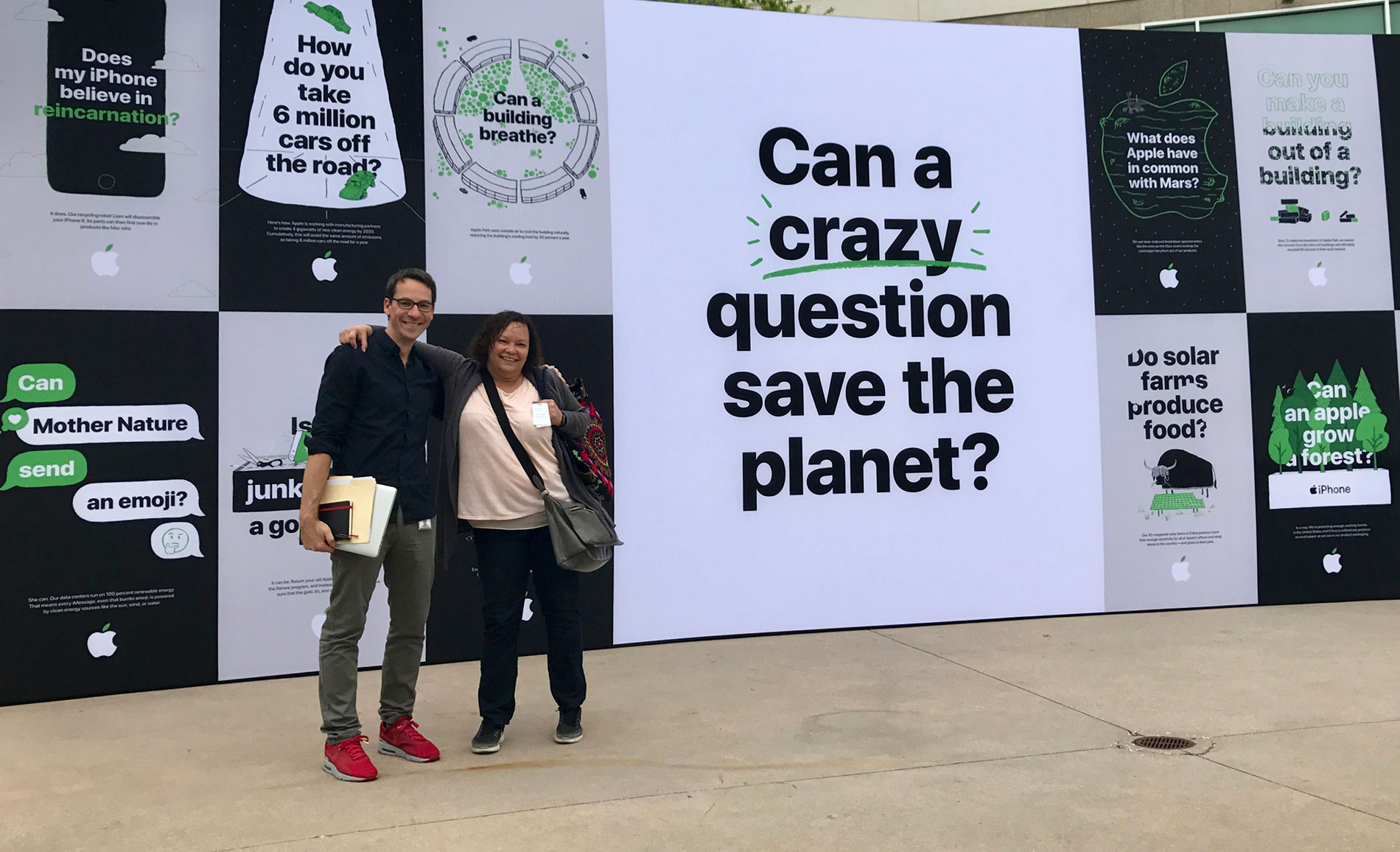
The author with Lisa Jackson at the Apple campus, Earth Day 2017. Photo courtesy of Chris Gaither.
How to advance equity in energy solutions in the COVID-19 era
Daphany Rose Sanchez
Mon, 07/06/2020 – 02:01
During the day I work in the energy sector supporting government and utilities design programs to perform outreach to and educate low-income and diverse communities. At night, I go back into my neighborhood, one thriving with diverse residents. Sitting on both sides of the table, I’d like to share what you need to pay attention to in order to be part of the solution on the interconnected fronts of energy efficiency and social justice.
If 2020 has shown residents in the United States something, it’s the dire need to understand historical barriers, immediately stop our current way of working and deliver energy solutions.
As a New York City resident, director of an energy consulting organization, an advocate of energy equity and a third-generation resident of public housing, I have a unique view of the structural barriers we must break down to solve the global climate crisis. As energy consultants developing energy solutions, it may feel difficult to look away from the bombardment of messaging about death and economic downfall, and videos of divisiveness and hatred.
More than 122,000 U.S. residents — our neighbors, friends and family members — have died from COVID-19. Witnessing a family member or a friend die so suddenly is new to most of us.
It may feel difficult to look away from the bombardment of messaging about death and economic downfall, and videos of divisiveness and hatred.
But the worst part is that our country has had not one pandemic, but two rising. We are seeing on social media people of color — specifically, Black people — murdered time and time again. As with COVID-19, families are worried about how many times they have to see a son, daughter, nephew or friend die so suddenly. They’re also the target of hatred from people they’ve never met, feeling the pain, worry and stress of being judged by their skin color.
Communities in the crosshairs
Meanwhile, COVID-19, just like other structural inequalities, has had the most profound impact on communities of color. Low-income Black and Latinx folks already quarantined within disinvested neighborhoods are seeing rampant infection and death.
They’re vexed with the choice of working as essential workers, risking getting sick or dying, versus losing income and risking eviction from an already overpriced apartment. But this isn’t new. Black, Latinx, Indigenous and other marginalized communities have long been resilient against natural disasters, racism, environmental toxicities and gentrification.
What should energy professionals who care about these interconnected crises and operate in historically underserved communities do? What’s the best way to look at COVID and racial injustice, and focus the negative emotions and stress onto positive, equitable energy solutions towards climate change?
You can start with the following steps:
Understand the connections and empathize
I have had conversations with many among the majority of people who live outside of yet sympathize with marginalized communities, and with others who demand justice but have a hard time understanding the relationship between equity and race. I’ve heard and seen the juxtaposition, and the idea that climate and racial justice are two separate issues. Others are aware of what actions are required but fearful of losing power obtained through an “injustice” system.
Americans are divided on how antiracist measures are critical to dismantling structural barriers, just as they are divided on the urgency to fix our planet in a way that minimizes the collateral damage of leaving the few behind for the greater good.
The worst part is that our country has had not one pandemic, but two rising.
To those of you who have a hard time understanding what we fight for or why we are so loud about climate justice and racial equity, think about how you feel during the rise of COVID: trapped at home, worried about your future. You’re frustrated, angry, depressed, stressed out. You want life to return to normal.
That’s how many of us feel who were raised as “different” races, ethnicities, cultures and identities. If we’re born in subsidized housing, others see us as less than human. It is a quarantined site whose children go to schools that receive less funding. We’re worried we won’t be able to make rent because we earn less. We’re afraid we can’t exercise outside for being mislabeled as a criminal and even killed. We’re worried our parents and grandparents will fall sick without a place for us to take care of them. We’re concerned about our future.
We walk a thin line — between being the person our employer wants (providing ideas only when asked) and being the person our parents raised us to be (outspoken, providing perspective based on our diverse understanding and experiences).
Listening and empathizing will bring you closer to understanding a community’s needs.
Assess the situation
Next, assess how you have engaged in the community. Assess who you are in relation to it. What has been done to support the local economy?
Have you or your company accelerated injustice? If so, how do you stop and promote equity within your organization? How do you resist selfishness and step down when someone else with a necessary perspective can be elevated? How do you release your power to support a cause? Self-change and organizational change is the first step to address inequity within the workplace.
Let communities lead
To assess low-income communities, examine what organizations already exist there. What type of outreach have they done, and how can you provide fiscal resources and collaborate with them on programming? Nonprofits, unions and coalitions within those communities have decades of experience engaging and communicating successfully with their neighbors. They have built trust and know what works and what does not. They are familiar with how to tailor government programming specifically for groups with different cultural backgrounds and energy-use needs.
Nonprofits, unions and coalitions within those communities have decades of experience engaging and communicating successfully with their neighbors.
To all energy firms: Actively investigate how you are supporting these organizations. Consider mandating a percentage of community representatives on all committee programming boards, regardless of technical expertise, developing materials that are culturally and linguistically representative of the community.
Eliminate the transactional relationship with the community. Develop a communal process where you are supporting participants with their mission, helping them build wealth and create a sustainable future for their neighborhoods. Developing long-term community relationships can help us collectively tackle climate change.
Evaluate information access
Energy consulting firms are also evaluating methods of operation and delivery of energy outreach programming and design. The first thing that comes to everyone’s mind in light of COVID-19 work-from-home quarantine is virtual access as in-person meetings, audits and processes move online.
Just as equitable engagement begins with collaborating across sectors to achieve an overarching goal, the clean energy sector must think about collaborating with internet providers while developing outreach and incentive programs that advocate for equipment that requires WiFi. If your energy program incorporates such incentives, think about the additional burden to low-income customers. How can your funding expand to provide an internet connection to residents?
At Kinetic Communities Consulting, our projects have shown that if you provide a separate incentive that improves qualify of life, people are more inclined to pursue energy efficiency. Providing internet at a low or no cost with a solar or air source heat pump project provides a quality-of-life improvement.
How can your funding expand to provide an internet connection to residents?
Roughly three in 10 adults with household incomes below $30,000 a year (29 percent) don’t own a smartphone, and more than four in 10 don’t have home broadband services (44 percent) or a traditional computer (46 percent). And a majority of lower-income Americans are not tablet owners. Collaboration with local internet providers, nonprofits supporting low-income Americans and local government can help close the communication gap. Partnerships with internet providers removes one barrier to energy efficiency programs invested in installing new climate-friendly technologies.
Using community aggregation engagement also provides customers the opportunity to obtain a lower internet bill cost and entice customers to complete projects. It gives residents a platform to learn more about their utility usage and lifts a concern of access and awareness.
Consider equitable hiring and training
COVID has exposed how people of the global majority — that is, people of color — are the first to be laid off, as the latest U.S. employment numbers bear out. Black and Latinx workers are hit the hardest in clean energy, with Latinx workers comprising 14 percent of the industry but 25 percent of its job losses.
For energy consultants, the automation of audits and processes can further exacerbate layoffs. When energy consulting firms develop automated methods to accelerate energy outreach and program development; they must consider equitable hiring and training practices. Think about what you have learned in your own position — the relationship of your skillsets and a job’s requirements — to be mindful of whom you are rehiring and who your job postings reach. Consider developing gender-neutral job postings and removing a candidate’s education to avoid unconscious bias. Not only is hiring and training critical, but understanding the work culture you have created can nudge diverse candidates either to grow within or leave your organization.
An equitable path forward allows the energy industry community to become more robust and unified.
These types of efforts pay off. Companies with the most diverse executive teams were 21 percent more likely than others to enjoy above-average profitability, according to a 2018 study by McKinsey & Company. For executive teams with ethnic and cultural diversity, this likelihood rose to 33 percent. A study by the Boston Consulting Group found that revenue tied to innovation, in terms of products and services launched in the past three years, was 19 percent higher for companies with above-average diversity in management.
Spend time creating and maintaining professional development opportunities for staff to learn and grow within the industry. Be mindful of who you believe should be in the position and be open to the skillsets people have, regardless of the industry standards.
Educate yourself
Below are some amazing people of color/people of the global majority articles you can read to understand the importance of the intersection in energy and social justice:
• Black environmentalists talk about climate and antiracism
• Climate activists: Here’s why your work depends on ending police violence
• Why every environmentalist should be antiracist
• How racism manifests in clean energy
• The climate movement’s silence
• How to help Black employees
• Felecia Hatcher: Tech community must do more than tweet support. It needs to invest
• I’m a black climate expert. Racism derails our efforts to save the planet
• Hold my earrings: Black women lead on systemic solutions in the COVID-19 pandemic and beyond
People are dying, and some may not psychically see it, unlike hurricanes or wildfires. U.S. society is in a state of shock and feels a sensation of dystopian reality. An equitable path forward allows the energy industry community to become more robust and unified, giving people who are hit the hardest the opportunity to engage, participate and create a unified solution for a climate-resilient future. The first step is to become aware, and the next step is action.
Pull Quote
It may feel difficult to look away from the bombardment of messaging about death and economic downfall, and videos of divisiveness and hatred.
The worst part is that our country has had not one pandemic, but two rising.
Nonprofits, unions and coalitions within those communities have decades of experience engaging and communicating successfully with their neighbors.
How can your funding expand to provide an internet connection to residents?
An equitable path forward allows the energy industry community to become more robust and unified.
Topics
Cities & Communities
Environmental Justice
Equity & Inclusion
Featured in featured block (1 article with image touted on the front page or elsewhere)
Off
Duration
0
Sponsored Article
Off

Lady Liberty and New York City at sunset.
rudall30
Labels: Disdain them — except one
Bob Langert
Mon, 07/06/2020 – 01:45
A longtime friend told me he was Christian and couldn’t support Democrats because it violated his principles. Then I heard a news update that Republicans were trying to ax Obamacare. I think I’m an Independent.
I’ve been spending more time contemplating the racial problems our country faces. I admire the friends and family that have posted Black Lives Matter signs. I just read “White Fragility,” and it infused me with thoughts that challenged my privileged white life. I hadn’t thought I was a racist, but I now realize I am because I’m part of a systemic white-dominant society by default. Truly. And it’s got to change, including me.
I’ve thought of myself as young. But now I get up in the morning and hobble about until I’ve warmed up my body to stand straight.
Labels. Can’t stand them. Listening to the radio the other day I heard an ad that said, “All of us use social media way too much.” How do they know that about me? I’m not too married to Twitter.
I self-label myself as “athletic.” Yet I played a bocce match the other day against an 80-year-old woman who’d recently had surgery on her arm and had to toss the bocce ball with her odd hand. I lost. By a lot.
There is one label I genuinely like and admire: ‘I’m a seasoned corporate sustainability leader.’
Another good friend of mine told me on the phone that he never thought I was a radical, “so liberal,” after reading my book about corporate sustainability (“The Battle to Do Good”). I don’t think of myself as liberal, but I’m finding in my daily conversations with friends that maybe I really am. Just yesterday, a good friend of mine said he doesn’t like the politics of Starbucks. And I’m thinking, “This is a company that is really trying to do good.”
I passed on a very interesting New York Times article about health care to a buddy. He told me the article was narrow-minded and wrong because — well, it’s from the New York Times. He gets his news from Fox. We’re still buddies, although sometimes I wonder where to draw the line on sharing similar values. He said I’m a CNN person. I do watch/listen to it the most.
I find myself labeling others and am ashamed that I do. He is a bully. She is slovenly. And I thought I was a good Catholic.
There is one label I genuinely like and admire: “I’m a seasoned corporate sustainability leader.”
I started this work by addressing the Big Mac polystyrene clamshell some 32 years ago. Finding the good intersection of business and society has grabbed my heart and mind ever since.
But now I am mostly retired. It’s yet another label I disdain. If anything, I feel like I’m accelerating, not stepping back. Even though I made the choice to wind down my sustainability career, I have lots yet to give to my family, friends, neighbors and community.
The couple of Myers-Briggs tests I’ve taken have labeled me an introvert working in an extroverted field. My safe haven is to be alone. But what I find I miss the most about working in the day-to-day of corporate sustainability is the gobs of good people I got to know, share, laugh, commiserate with and share a passion to change the world for the better.
You are my good friends. I like being with you.
Which brings me to my very least favorite label: “Retired from GreenBiz.” My regular writing for GreenBiz has seen its better days. I love writing about sustainability, but now that I’m not in the frontlines, I find I have little to write about. So this is my final column.
I love the GreenBiz community, starting with Joel Makower, who I met 30 years ago when I bought a bunch of his books for McDonald’s people. His integrity and caring attitude permeate the whole organization. John Davies is full of bright insight and even better wit. Twenty-four hours at a GreenBiz Executive Network meeting was like filling up the tank with high-octane gas. I was ready to rock and roll after every meeting I attended.
Everyone I meet at GreenBiz is an awesome person. How do you do it, GreenBiz?
Thank you for the opportunity to write a column with my thoughts for the past five years.
As you can tell, I’m not one for being labeled. It irks me. But you can label me a “big sap” for how much I care about the entire sustainability movement — and the special people that make it happen.
Pull Quote
There is one label I genuinely like and admire: ‘I’m a seasoned corporate sustainability leader.’
Topics
State of the Profession
Featured Column
Featured in featured block (1 article with image touted on the front page or elsewhere)
Off
Duration
0
Sponsored Article
Off

GreenBiz photocollage
What role does ESG play in the ‘new normal’?
Janine Guillot
Mon, 07/06/2020 – 01:25
Facing existential crisis, it’s only natural that our perspective will change — for better and for worse. In recent weeks and months, as many of us have “sheltered in place” in the face of a global pandemic, each of us has come to grips with a valuable reminder of what’s truly important: family, friends and colleagues; security and safety; food and water; healthcare. By comparison, everything else seems small and suddenly insignificant. For some of us, that includes our work.
When people are sick, suffering and dying — with little certainty about when or how it will end — how can we be expected to focus on a project deadline, a business meeting or a PowerPoint presentation? Recently, I was asked to participate in a webinar discussion about environmental, social and governance (ESG) investing in the wake of COVID-19, and I had to ask myself, “Is the work we’re doing at SASB completely irrelevant or more relevant than ever?”
The most urgent and important work being done today is that of our healthcare workers, grocery employees, delivery people and others on the front lines of meeting society’s most basic and most critical needs. We shouldn’t let a day pass without thanking them for their service, nor without asking ourselves how we can better support them as they rise to meet the scale of challenge before us.
And soon, we must start giving serious thought to what we can do to ensure they’re never put in such a desperate position again.
Respond now, adapt as soon as possible
While today’s triage efforts are paramount, society is clearly starting to think about what’s next. This is an opportunity for all of us — companies, investors, government, civil society — to think critically about what our role might be in creating a more resilient future.
Although the global COVID-19 outbreak is first and foremost an existential public health threat, it also likely represents the dawn of an economic “new world order” and a reshaping of the global economy. Without question, it’s too soon to draw any conclusions about the lessons we’ve learned from this experience, but it’s nevertheless clear that businesses, investors and our entire system of free enterprise will need to adapt to a new normal in the coming post-coronavirus era.
Transparency leads to accountability, accountability drives innovation and innovation is key to resilience.
In recent years, the rise of ESG, responsible investing, corporate sustainability — different people use different terms — has focused on evolving “business as usual” by recognizing that effectively managing environmental and social issues is key to the long-term sustainability of both business and society. The COVID-19 crisis is likely to accelerate this trend. The key questions that have arisen from the crisis are essentially ESG questions, such as:
- Will rising biodiversity loss and the changing climate influence the frequency and intensity of pandemics? How can companies adapt to ensure business continuity in such an uncertain environment?
- How can we ensure more resilient supply chains for essential goods, such as food and medicine?
- What can businesses in B2C industries do to ensure the health and safety of their employees and customers?
- How can healthcare providers better ensure access to critical tests and treatments at an affordable price?
- How might a long-term period of “social distancing” influence the adoption of artificial intelligence and robotics, and how will that affect workers whose jobs can’t be done remotely — such as manufacturing, waste management and deliveries?
- How can traditional and ecommerce retailers ensure fair pricing and reduce the risk of supply hoarding or price gouging?
- How can a wide range of industries — across the transportation, technology, hospitality and infrastructure sectors and beyond — effectively adapt in the wake of an anticipated rise in telecommuting and teleconferencing?
- Will the COVID-19 crisis permanently change consumer behavior regarding shopping, travel and entertainment, with significant implications for the retail and hospitality sectors?
Once the worst of the current crisis is behind us, it’s crucial that we don’t weaken our resolve to ensure that individuals, businesses, investors, economies — and thus society at large — can become more resilient in the face of 21st-century challenges.
An opportunity to adapt
In the coming months, as the forces unleashed by the COVID-19 crisis continue to reshape the economic landscape, they will bring long-held assumptions under scrutiny and potentially render entire business models irrelevant. They will bring more questions, but also — if we’re receptive to them — more answers.
At SASB, we encourage long-term thinking in capital markets, and while that may not help solve today’s crisis, we believe it can contribute to preventing — or at least tempering — tomorrow’s.
We believe transparency and disclosure on business-critical ESG issues will improve how companies and investors measure and manage so-called non-financial — but nevertheless critical — resources such as natural, social and human capital. Further, it will help corporate directors and managers, along with investors, understand how effective management of those resources is critical to the long-term sustainability of a business.
Emerging from this crisis, we can shape a future in which the interests of business, investors and society are in closer alignment.
The best answer to my question about the relevance of our work came during a recent “industry deep dive” webinar. Our restaurant industry analyst was discussing the connection between worker health and foodborne illnesses — a business-critical issue in the restaurant industry — and the metrics that can help drive effective management of such risks, including worker training and food-handling protocols.
I immediately thought about the increasingly clear connection between lack of paid sick leave and the spread of illness, and it became clear: This crisis will provide important new insights into non-traditional performance metrics that will help drive a structural shift in how both companies and investors think about delivering long-term value to both shareholders and society.
To return to my original question — is ESG disclosure irrelevant or more relevant than ever — I believe the communication piece is key. Transparency leads to accountability, accountability drives innovation and innovation is key to resilience. When investors readily can identify and direct financial capital to the forward-looking companies that are evolving their business models to thrive in the face of future risks, markets will be more stable, more efficient and better prepared to absorb unexpected shocks.
Today, we’re being asked to choose between lives and livelihoods. Emerging from this crisis, we can shape a future in which the interests of business, investors and society are in closer alignment. When economic and human prosperity are mutually supportive, we won’t have to sacrifice one for the other.
Pull Quote
Transparency leads to accountability, accountability drives innovation and innovation is key to resilience.
Emerging from this crisis, we can shape a future in which the interests of business, investors and society are in closer alignment.
ESG
Featured in featured block (1 article with image touted on the front page or elsewhere)
Off
Duration
0
Sponsored Article
Off

How 5 communities across the US are seeking environmental justice
Kristoffer Tigue
Mon, 07/06/2020 – 01:00
This story originally appeared in InsideClimate News and is republished here as part of Covering Climate Now, a global journalistic collaboration to strengthen coverage of the climate story.
In many ways, Maleta Kimmons defines her neighborhood by what it lacks.
Several houses near her home remain vacant. Last week, she had to drive seven miles just to buy groceries. And two weeks ago, at the height of the Minneapolis protests sparked by the killing of George Floyd by a police officer May 25, looters broke into the only pharmacy in the area, forcing the store to close and leaving many in the neighborhood without easy access to life-saving medication such as insulin or inhalers for asthma.
Kimmons, who prefers to go by the name Queen, said what her neighborhood doesn’t lack is pollution. Near North, where Queen lives, is one of several neighborhoods that make up north Minneapolis, a predominately Black area surrounded by a large number of polluting facilities and infrastructure, including roofing manufacturers, a trash incinerator, a metal recycling plant and several major interstate highways.
The ZIP code that covers much of north Minneapolis has the highest hospitalization rates for asthma in Minnesota, according to Minnesota Public Radio. It’s also home to the highest rates of lead poisoning among children in the city.
Add the ongoing coronavirus pandemic on top of these factors, and her neighborhood is in a “horrific” situation, said Queen, who is Black.
“Where are you going to get an asthma pump when Walgreens is closed?” she said. “I know a lot of people that have asthma, particularly in North.”
Queen moved to Minnesota from Chicago in 1974 at the age of 10, first living in what used to be St. Paul’s Rondo neighborhood — a once-thriving African American hub before it was cut in half by the construction of Interstate 94 in the late ’50s. Her family, she said, was “looking for a better life, where there would be more resources, education, housing.”
You’ve got to have ownership. … It’s race, class, money and politics. That is the narrative. That is the story.
Eventually, Queen’s family moved to south Minneapolis. But in the 1990s, she said, the area became gentrified and too expensive, so she left for the city’s cheaper north side.
Queen attributes the issues that north Minneapolis faces today — the vacant homes, the poor access to medicine and food, the proximity to industrial pollution — to a lack of Black ownership and the political power that accompanies wealth. “Right now, over in North, you can’t name 10 Black businesses — they ain’t there,” she said. “If you don’t own anything, you’re not changing nothing.”
In 2018, the median household income in Queen’s neighborhood was about $39,000, compared to the state average of more than $70,300.
As protests raged across much of south Minneapolis, destroying several blocks of Lake Street — another historic city business corridor — Queen helped rally residents on the north side to protect the few Black-owned stores that do exist along Broadway Avenue from more looting. (Much of the looting came from out-of-towners, Queen said.)
The destruction she witnessed reminded her of the stories she had heard of the 1967 riots, which also destroyed parts of north Minneapolis. And it reminded her of seeing her first limousine in 1974 outside of a black-owned pool hall in St. Paul.
She remembers her Black neighbors inside the stretched-out sedan, a symbol of wealth, celebrating in their “loud colors,” their button-up shirts and their hard shoes. She remembers just years later, many of the Black-owned businesses shuttering their doors along Rondo’s Selby Avenue — today, an upscale food co-op stands where the pool hall used to be.
“You’ve got to have ownership,” Queen said. “It’s race, class, money and politics. That is the narrative. That is the story.”
St. John the Baptist Parish, Louisiana: ‘We’ve already been written off’
Reserve, Louisiana, had an agrarian economy when Robert Taylor was born. His parents worked at a local sugar refinery. “I’m a lifelong resident,” he said. “I was born here in 1940, so I’ve seen some changes.” When he was a boy, he said, “I could just walk out my house and go out my backyard and I was in a sugar cane field.”
By the time he was a young man, the petrochemical industry was moving in. He bought a plot of land on the edge of town and built a home, finished by the time his fourth child was born, he said. “I went and got my wife from the hospital and brought her with our child to our new home.”
Around the same time, he said, DuPont began operating a new chemical plant less than a thousand yards from the home.
St. John the Baptist Parish, which includes Reserve, lies within Louisiana’s “Cancer Alley,” a stretch along the Mississippi River between Baton Rouge and New Orleans that is cluttered with petrochemical development and the pollution it brings. The Environmental Protection Agency’s National Air Toxics Assessment, which uses emissions estimates to model health risks, estimates that the risk of developing cancer in Reserve is 50 times the national average, and that the five census tracts with the highest risk are all in the area.
But as Taylor watched the development spring up around him, he didn’t know any of that. All he knew was that a lot of people seemed to be getting sick. Several family members have died of cancer, he said, while his wife is a cancer survivor. It wasn’t until four years ago that Taylor began to connect what he saw with the industry that had developed around him.
The risk of developing cancer in Reserve is 50 times the national average, and the five census tracts with the highest risk are all in the area.
“I came home one night and my wife was so sick, and the odor was so horrible coming from the plant, that I called 911,” he said. “And the emergency personnel, they were taken aback by the odor. Of course, all of them was white, none of them lived in the community I lived in,” he said. Almost two-thirds of Reserve’s residents are Black.
It never occurred to him that other parts of the parish didn’t have it as bad. And soon after that incident, the EPA arrived and began monitoring for a chemical, chloroprene, that is used in the nearby plant and is considered by the agency to be a “likely carcinogen.”
“I got the first results of the monitoring; it scared the heck out of me,” he said. When the EPA found high levels of the chemical in the air near a school, “that’s really what sparked the people to join me and we formed this Concerned Citizens of St. John.”
His group has been trying ever since to get Denka Corporation, which bought the plant from DuPont in 2015, to limit emissions. Denka did not reply to requests for comment from InsideClimate News, but a company website says it has voluntarily reduced emissions and that “there is no evidence to suggest Denka’s operations are harmful to local residents.”
Taylor’s wife now lives in California, to be away from the pollution. Some of his children have moved out of the parish, too. His great-granddaughter was born recently nearby, “and she has no future here,” he said.
But he feels trapped with his home. Beyond the low value of the property, Taylor said, he wouldn’t feel right selling to another family, only to have them live with the same burden.
“We’ve already been written off. We’re walking dead people,” he said. “We’ve been sacrificed.”
Bears Ears National Monument, Utah: Trump ended tribal governance
Alfred Lomahquahu helped build the five-tribe coalition that proposed the Bears Ears National Monument in southeastern Utah.
The land might seem remote, but the struggle against racial and environmental injustice has been no different for the indigenous people of the Southwest than for those protesting on the streets of the world’s cities.
“People are actually getting united,” said Lomahquahu, a Hopi. “That’s the main thing that the government is afraid of, that’s why they don’t want these protests going on.”
The coalition’s work focused on protecting red rock canyons and pinion-dotted desert containing hundreds of thousands of archaeological sites and areas of deep cultural significance to the Hopi Nation, Zuni Tribe, Navajo Nation, Ute Indian Tribe and Ute Mountain Utes.
“We started speaking with [President Barack] Obama on a one-to-one, government-to-government basis,” said Lomahquahu, now community administrator in the Hopi village of Baqavi in northern Arizona. “Part of our strategy was that we were going to work side by side with [the U.S. Bureau of Land Management] and all these other government entities as part of the planning for the whole monument.”
The Obama administration embraced the idea, establishing and empowering a Bears Ears Commission when it created the monument. Lomahquahu was the commission’s co-chair until it was abolished when the Trump administration downsized the monument by 85 percent not quite a year later.
Some people are privileged more than others and willing to use that privilege to help everyone get back on their feet.
Trump administration officials rebuffed commissioners and other monument supporters, he said. “But we already knew at that point that everything that we achieved was going to go down the drain — and for every other minority, too.”
Yet, the experience also showed the tribes, historically at odds with one another, the power of working together, he added. Later, conservation groups, professional societies, recreation groups and even large companies such as Patagonia joined the tribes’ campaign to protect the land from mining and pollution.
“Some people are going to use their privilege in order to help others that aren’t privileged,” Lomahquhu said. “I think that’s something that you really need to look at now. … Some people are privileged more than others and willing to use that privilege to help everyone get back on their feet.”
New uranium mining, coal-fired power and oil and gas development in the region are other threats that the Four Corners region has faced. More recently, Indian Country communities have united against COVID-19.
“We’re just waiting for Trump to leave office,” Lomahquhu said, “so we can get back in there and regroup again and bring all entities back together.”
The Rockaways, Queens, N.Y.: Young leaders of color building resilient communities
Milan Taylor was 21 when he founded the Rockaway Youth Task Force in 2011, to sponsor community clean-ups and encourage voter registration in this outlying neighborhood on a barrier island in Queens.
A year later, after Hurricane Sandy left homes four to 10 feet underwater and knocked out power for days, Taylor found himself helping to lead rescue and relief efforts in a neighborhood that was 60 percent African American and Hispanic and the poverty line was 20 percent higher than the state average.
He mobilized hundreds of volunteers in a widespread effort to assess the needs and deliver food and medications to hundreds of home-bound community members, including elderly and disabled residents. As they meticulously canvassed high-rise apartment buildings, the major relief organizations and the NYPD seemed strangely missing in action.
“Sandy gave us the exposure that [the Rockaway Youth Task Force] needed to grow,” said Taylor, now 31 and the group’s executive director.
And a good thing that is, with climate scientists predicting sea level rise of at least a foot by 2050, which will make the Rockaways more prone to climate change-fueled flooding and storm surges than they already are.
“What we’re trying to accomplish as an organization is to build more resilient communities,” Taylor said, “We want to be there, whether it’s a disaster brought about by climate change or even human disasters” — a reference to the ongoing protests for racial justice and an end to police violence.
The conversation of Black lives mattering isn’t just limited to police violence … It also extends to climate justice.
Taylor said that it is important for the task force, made up largely of young people of color, to be “led by our own constituency, meaning that those who are directly impacted decide which direction and which campaigns we take on as an organization.”
Despite being told after Sandy that his organization couldn’t grow, he said, “We’re still here … still doing work, still helping our communities and still training the next generation of leaders.”
He noted that one former RYTF organizer, Khaleel Anderson, is running for the New York State Assembly.
In the future, Taylor said, he hopes the broader climate movement embraces his work with the task force, which recognizes how race, gender and socioeconomic factors contribute to environmental injustice. “The conversation of Black lives mattering isn’t just limited to police violence,” Taylor said. “It also extends to climate justice.”
Los Angeles: Latino children in Boyle Heights play in lead-contaminated soil
Idalmis Vaquero sees such joy in the exuberance of a neighborhood boy named R.J.
The 6-year-old runs to her to show off his newest feat — a backflip — on the dusty patch of grass outside of their aging apartment complex owned by the Los Angeles Housing Authority.
Yet there is a dark contradiction between the glee of this boy and the reality of life in the shadow of a lead recycling plant that has poisoned the ground that dirties R.J.’s bare feet.
The boy, like so many other children and families living in this neighborhood, is exposed every day to the high concentrations of lead that have contaminated this mostly Latino community just southeast of downtown Los Angeles.
The Exide Technologies recycling plant and its predecessors emitted lead, arsenic and other dangerous pollutants, leaving homes, apartments, schools, parks and day care centers with dangerously high levels of lead-contaminated soil.
Vaquero, 26, a third-year student at the University of California, Los Angeles School of Law, grew up in public housing in the Boyle Heights neighborhood, where she still lives and where her parents settled after emigrating from Mexico nearly 30 years ago.
There has been little change in her neighborhood since she was a child. Factories, smoke stacks and exhaust-belching diesel trucks define the community more than grassy parks and welcoming recreation centers.
So she worries about the future of R.J. and other children.
“Living here will have an impact on the quality of life for the rest of their lives,” she said. “It makes me mad that our lives are not considered equal when it comes to addressing environmental hardships.”
As many as 250,000 residents, mostly working-class Latinos, face a chronic health hazard from exposure to airborne lead and arsenic that subsequently settled into the soil from the recycling plant, according to a 2013 health risk assessment by the South Coast Air Quality Management District.
The health of these communities need to be prioritized and protected from any more pollution from Exide and other environmental injustices.
Lead contamination has been found in children growing up in neighborhoods surrounding the now-shuttered Exide battery plant, a University of Southern California study found. Lead is a neurotoxin, and there is no level that is considered safe in humans.
The 15-acre recycling facility operated in the industrial city of Vernon for decades with minimal regulatory oversight. It churned out poisonous pollution around the clock seven days a week as the lead from 25,000 old car batteries was melted down every day for use in producing new batteries.
The facility received more than 100 environmental violations for such things as lead and acid leaks and maintaining an overflowing pond of toxic sludge.
The Exide plant was shut down in 2015 by the U.S. Department of Justice, which also ordered the company to pay $50 million to clean up the site and nearby neighborhoods. The state later pledged $75 million for the ongoing cleanup, overseen by the California Department of Toxic Substances Control.
The cleanup has been painfully slow, which Vaquero takes as yet another signal that her neighborhood and neighbors are just a forgotten footnote in a city defined by the glitz of Hollywood and Beverly Hills.
Vaquero majored in environmental studies at Wellesley College in Massachusetts, where she made the decision to stand up for her community and others like hers.
She described the environmental injustices in her community in a 2016 thesis:
“The health of these communities need to be prioritized and protected from any more pollution from Exide and other environmental injustices,” she wrote. “The community’s power and resilience will prevail and environmental justice will be served to Southeast Los Angeles.”
Pull Quote
You’ve got to have ownership. … It’s race, class, money and politics. That is the narrative. That is the story.
The risk of developing cancer in Reserve is 50 times the national average, and the five census tracts with the highest risk are all in the area.
Some people are privileged more than others and willing to use that privilege to help everyone get back on their feet.
The conversation of Black lives mattering isn’t just limited to police violence … It also extends to climate justice.
The health of these communities need to be prioritized and protected from any more pollution from Exide and other environmental injustices.
Contributors
Topics
Environmental Justice
California
Policy & Politics
Featured in featured block (1 article with image touted on the front page or elsewhere)
Off
Duration
0
Sponsored Article
Off
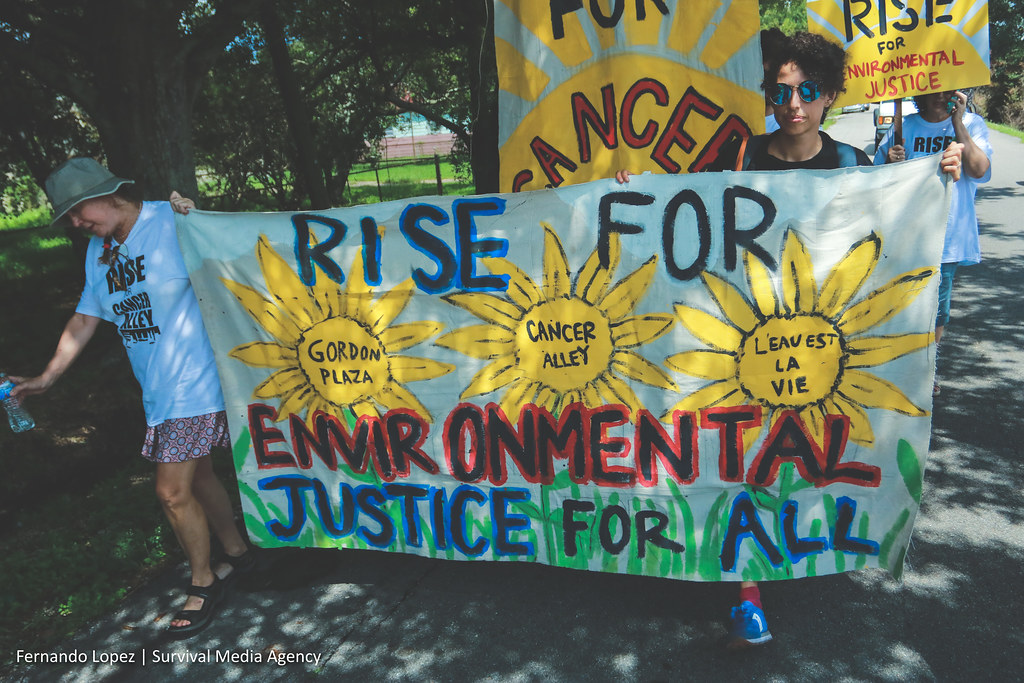
People march in St. James, Louisiana, a small Black community at the end of the Bayou Bridge Pipeline, to demand a safe and open evacuation route. Given the level of toxicity in this parish, it has earn the name of Cancer Alley. Credit: Fernando Lopez for Survival Media Agency
- Coronavirus threatens to overwhelm Texas hospitals: Live updates Al Jazeera English
- Coronavirus: Australia to close Victoria-New South Wales border BBC News
- Australia closes state border for first time in 100 years to halt coronavirus Reuters
- ‘Smart call’: Victoria, NSW to seal border because of coronavirus Al Jazeera English
- Asia Today: Australian state’s cases spike, borders to shut ABC News
- View Full Coverage on Google News
- 8-year-old girl fatally shot near Rayshard Brooks’ memorial site; Atlanta mayor tells protesters to ‘clear out’ NBC News
- Heartbroken parents of slain 8-year-old have message for her killers: ‘You killed a child’ 11Alive
- Atlanta mayor says Wendy’s occupied by protesters will be cleared after shootings; 8-year-old girl killed Fox News
- Police responding to 2nd deadly shooting in 24 hours near burned Wendy’s WSB Atlanta
- Several children killed, dozens of people injured in shootings over July Fourth weekend in US WUSA9.com
- View Full Coverage on Google News
- Kootenai Sheriff, Coast Guard recover two victims from downed planes in Lake Coeur d’Alene The Spokesman-Review
- Eight people are believed to be dead after two planes collided over Idaho’s Coeur d’Alene Lake CNN
- Initial reports say 8 people involved in plane crash above Lake Coeur d’Alene. Two confirmed dead KTVB
- Initial reports say 8 people involved in plane crash above Lake Coeur d’Alene. Two confirmed dead KTVB.com
- 2 planes collide over Lake Coeur d’Alene, 8 feared dead Fox News
- View Full Coverage on Google News