Coffee maker Nespresso will certify two product lines with a regenerative label from the Rainforest Alliance, making the Nestlé subsidiary the first company to pilot the new certification.
Regenerative agriculture is experiencing a growth spurt, but the lack of a clear definition for the process has hampered efforts to market the benefits. The entry of a certification from one of the best-known independent labels provides a new option.
“The certification is really about consumer communication and consumer trust,” said Christopher Henry, head of U.S. sustainability communications at Nespresso. “The Rainforest Alliance seal is very well known, very trusted by consumers.”
From coffee to cocoa
Farms in Nespresso’s supply chain will comply with the alliance’s Regenerative Agriculture Standard, announced earlier this month, by building soil health, improving resilience to climate change and protecting biodiversity. Techniques include use of cover crops, integrating forestry into coffee plantations and water-efficient irrigation. The standard is initially only available to coffee growers, but will be expanded to cocoa, citrus and tea next year.
More than 40 percent of the Nespresso’s coffee already comes from farms that have earned the standard Rainforest Alliance certification. “We’ve been working with [the alliance] for over 20 years now,” said Henry, who added that the standard certification covers around 150 criteria. “This is an up-level with an additional 17 criteria focused on soil health, biodiversity and climate resilience.”
Nespresso will pilot the certification with coffee from around 4,300 farmers in Costa Rica and 2,000 in Mexico, with the label appearing on products next year. “From the business standpoint it protects the supply chain,” explained Henry. It also taps into growing demand from consumers for environmentally friendly farming. “They are becoming far more aware of what they’re ingesting, how it has grown and what environment it’s been in,” he said.
https://sustainable-future.org/wp-content/uploads/2025/03/cropped-trellis_favicon_180x180.png3232sustainablefuturehttps://sustainable-future.org/wp-content/uploads/2024/06/Untitled-design-117-300x94.pngsustainablefuture2025-09-24 10:00:002025-09-24 18:08:42Nespresso first to pilot regenerative label from Rainforest Alliance
The opinions expressed here by Trellis expert contributors are their own, not those of Trellis.
Risk mitigation efforts such as reducing emissions, transitioning to clean energy and setting science-based targets have dominated corporate climate strategy in recent years. But now, forward-thinking companies are going beyond that to transform climate adaptation strategies into competitive advantages and business drivers.
The business case for climate resilience goes beyond merely avoiding losses. Companies with strong adaptation strategies often gain a “resilience dividend” that grows over time. As extreme weather events become more frequent and severe, operational reliability becomes a key differentiator, allowing resilient businesses to maintain consistent service while others face disruptions. This reliability fosters customer loyalty and attracts talent, especially among younger workers who value future-ready employers. Additionally, climate resilience enhances access to capital, as credit rating agencies increasingly factor it into their assessments, leading to lower borrowing costs and attracting investors focused on long-term stability.
Below are several case studies that show how adaptation strategies became a competitive advantage.
Microsoft’s climate-ready cloud infrastructure
Microsoft didn’t just build energy-efficient data centers for its cloud infrastructure — it engineered facilities specifically designed to operate through extreme weather events. Their heat-resistant cooling systems, flood-proof designs and redundant power systems have become a selling point with enterprise customers who can’t afford downtime during climate disasters.
Given the increasing extreme weather phenomena, operational continuity can translate directly into customer acquisition. While neither Microsoft nor its recently on-boarded customers such as SAP and VMWare disclosed reasons for migrating to the company’s “climate-ready” cloud services, it’s not a stretch to think those customers considered extreme weather/disaster preparedness as essential infrastructure rather than a nice-to-have feature.
While Microsoft doesn’t break out revenues derived from its climate resilient offerings, it acknowledged in its 2024 10-K filing that “providing our customers with more services and solutions in the cloud puts a premium on the resilience of our systems and strength of our business continuity management plans.”
Unilever’s regenerative supply chain strategy
Unilever transformed its agricultural sourcing from a cost-minimization exercise into a competitive moat through regenerative agriculture programs. Rather than simply diversifying suppliers to reduce climate risk, it’s working with farmers to build soil health, improve water retention and increase crop resilience. In 2022 through its Knorr brand, Unilever worked with Spanish tomato suppliers and farm managers to help them protect crops from decreased rainfall and depleted underground water reserves. Using cutting-edge sensors and soil probes that inform farmers about the exact amount of water needed affords more precise water use and results in significant financial savings and a more resilient production system. These activities achieved:
A 37 percent decrease in greenhouse gas emissions per kilo of tomatoes compared to pre-project levels
Soil organic matter increased from 1 percent to 1.27 percent over two years, a key indicator of soil fertility and carbon capture ability
A 173 percent increase in pollinators and 27 percent increase in wildflower diversity where farmers planted wildflower borders
This strategy delivered multiple competitive advantages. First, price stability during commodity price volatility gave Unilever predictable input costs while competitors faced margin pressure. Second, brand differentiation through traceable, climate-adapted ingredients appealed to environmentally conscious consumers. And most significantly, supplier loyalty protected market share — farmers invested in Unilever’s regenerative programs are less likely to work with competitors. Unilever earned $1.5 billion from internal cost savings actions based on sustainability criteria such as energy efficiency and waste reduction from 2008 to 2021.
Zurich Insurance’s evolution from risk transfer to risk advisory
Five years ago, Zurich Insurance recognized that traditional insurance — transferring climate risks after they occur — was becoming an increasingly expensive and inadequate solution. So it repositioned itself as a climate resilience consultant, helping clients adapt before disasters strike.
Zurich Insurance announced their “Resilience Solutions” — a rebranding of overall risk services that now generate revenue streams that didn’t exist five years ago including climate risk assessments, adaptation planning services and resilience technology implementations. Rather than simply paying claims after floods or storms, Zurich Insurance helps clients build flood barriers, upgrade infrastructure and develop business continuity plans. The company has grown revenues from its sustainable activities from $566 million in 2022 to $1.7 billion in 2024.
This strategic shift creates customer stickiness that pure insurance products cannot match. Clients who work with Zurich Insurance on resilience planning are far more likely to maintain their insurance relationships and less likely to shop based purely on price. Both Zurich Insurance and investment analysts note this. The consulting revenue also provides more predictable income streams compared to traditional underwriting.
The adaptation-innovation framework
These companies’ successes share a common approach that moves beyond traditional risk management. Their adaptation strategies fall into three categories:
Defensive adaptations protect existing operations. This includes physical infrastructure upgrades, supply chain diversification, and business continuity planning. While necessary, defensive measures alone don’t create competitive advantage — they simply maintain existing market position.
Opportunistic adaptations turn climate challenges into business opportunities. This might involve developing products specifically for climate-changed conditions, serving markets that competitors can’t reach due to climate risks, or capturing market share when less-prepared competitors face disruptions.
Transformative adaptations reimagine business models for a climate-changed world. Companies in this category don’t just adapt their existing operations — they fundamentally restructure how they create and capture value in response to climate realities.
The most successful companies combine all three approaches, using defensive measures to protect their foundation while pursuing opportunistic and transformative strategies that create new sources of competitive advantage.
Measuring and communicating resilience value
Traditional financial metrics often fail to capture the full value of resilience investments. Companies need new approaches to measure and communicate adaptation benefits to stakeholders. As such:
Customer metrics become crucial. Retention rates during extreme weather events, acquisition costs for climate-concerned customers, and premium pricing for resilient products or services.
Operational metrics should track uptime during climate events, supply chain reliability compared to competitors, and employee retention in climate-vulnerable locations.
Financial metrics must evolve beyond ROI calculations to include avoided costs, reduced insurance premiums and improved credit ratings. Forward-thinking companies are also tracking “resilience revenue”—income streams that exist specifically because of their adaptive capabilities.
Investor communication requires reframing resilience investments from cost centers to value drivers. Rather than justifying adaptation spending as necessary expenses, companies should present them as strategic investments that enhance competitive positioning and create new revenue opportunities.
The future of resilience competition
Treating climate adaptation as a competitive advantage marks a significant shift in corporate strategy. As climate impacts intensify, companies that treat resilience as a strategic opportunity rather than a compliance task are poised to unlock outsized value. For investors and leaders, the takeaway is clear: climate resilience is no longer just about reducing risk — it’s about gaining a strategic edge in a world where adaptation defines the next wave of competitive advantage.
https://sustainable-future.org/wp-content/uploads/2025/03/cropped-trellis_favicon_180x180.png3232sustainablefuturehttps://sustainable-future.org/wp-content/uploads/2024/06/Untitled-design-117-300x94.pngsustainablefuture2025-09-24 10:00:002025-09-24 18:08:44How Microsoft and Unilever turned climate adaptation into a competitive advantage
Environmental groups have led the prosecution. ArcelorMittal generated just over 100 million metric tons of carbon dioxide equivalent in 2024, roughly on par with industrialized nations such as Belgium or Chile. Emissions of that size demand urgent attention, argue the company’s critics. Instead, ArcelorMittal has failed to build the green steel plants promised in its decarbonization agenda, while simultaneously returning billions of dollars to shareholders and building high-emissions facilities in India.
The defense from the company has been steadfast, and often backed by industry insiders. In this view, ArcelorMittal is committed to decarbonization but constrained by the steel market, which is being roiled by over-supply, high energy prices and a lack of government support for low-carbon initiatives. The company would like to decarbonize faster, it and other steelmakers insist, but economic realities make that impossible.
In this installment of Chasing Net Zero, our company-by-company look at progress toward 2030 climate goals, Trellis assesses the dueling narratives surrounding the largest steelmaker headquartered in the Global North. The disputes turn out to have little to do with decarbonization technologies or emissions data. The two sides broadly agree on the challenges the industry, which is responsible for around 8 percent of global emissions, faces in reaching net zero. Beneath the rhetoric, what’s in dispute is something more fundamental: which stakeholders a company should serve and, in the midst of a climate crisis, what constitutes leadership?
ArcelorMittal’s climate commitments
ArcelorMittal’s 2021 Climate Action Report, the origin of most of its current goals, was a feast of commitments:
Global emissions intensity, defined as the carbon released for every ton of steel produced, would fall 25 percent from a 2018 baseline by 2030.
A more ambitous 35 percent drop for European operations.
Reaffirmation of an earlier promise to reach net zero by 2050.
A two-year timeline for validation of its targets by the Science Based Targets initiative (SBTi).
The journey to these goals was also mapped out, including plans for more recycled steel and transitioning to clean energy sources. The flagship project would be what ArcelorMittal billed as “the world’s first full-scale zero carbon-emissions plant,” slated to come online in Sestao, Spain, in 2025.
The total cost: $10 billion by 2030, around a third of which the company said it would deploy by 2025. No small sum, but Arcelor, which is headquartered in Luxembourg, had the clout to follow through. It’s the world’s second-largest producer of steel, according to the World Steel Association. It makes steel in 15 countries, employs 125,000 people and generated $62 billion in revenue in 2024.
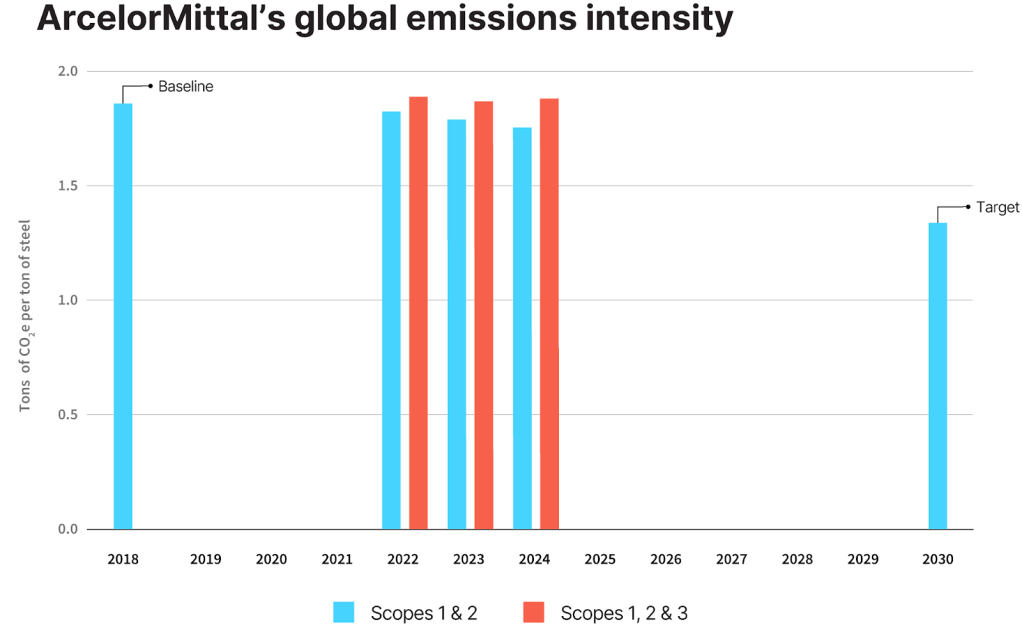
Four years later, the future envisioned in 2021 is barely closer to reality. ArcelorMittal’s absolute emissions have fallen by close to half, but almost all of that drop is due to declining production and asset sales. A better gauge of the company’s net-zero transition is emissions intensity, which has dropped by just 5.4 percent globally and 5.0 percent in Europe — well short of the pace required to hit its 2030 targets, which the company said in a November 2024 update that it was “increasingly unlikely” to meet.
What’s more, ArcelorMittal’s target only covers direct emissions from its steel plants and the electricity they consume — Scopes 1 and 2, in other words. This omits other significant sources, including upstream Scope 3 emissions from mining. When those emissions are added, progress all but evaporates.
Source: ArcelorMittal Sustainability Report 2024
As for plans to work with the SBTi, these also dissolved; the company’s commitment to set a near-term target with the organization was removed last year after the deadline for doing so expired.
In Spain, a critical part of the Sestao project is on hold. So are several other low-carbon projects in Europe, which was to be the focus of the company’s decarbonization push. ArcelorMittal’s total decarbonization spending between 2021 and 2024 was $1 billion — again, far behind the pace envisioned in the company’s climate action plan.
What’s more, the company’s calculations omit emissions from a 2019 joint venture with Nippon Steel in India, known as AM/NS. The company, of which Arcelor holds 60 percent, relies on conventional, high-emissions facilities. AM/NS emissions in 2024 were 17 million tons, placing Arcelor’s share at 10 million tons. That would increase ArcelorMittal’s total emissions by almost 10 percent, were the company to include them in its global total. But while revenue from the joint venture is included in the company’s financial statements, the emissions are omitted from its sustainability report.
The industry is off track
From a planetary perspective, ArcelorMittal’s net-zero narrative makes for depressing reading. From an industry point of view, it’s pretty much par for the course.
“We’re not an anomaly,” said Nicola Davidson, Arcelor’s vice president for sustainable development and corporate communications.
Things looked different when the company set its targets in 2021. ArcelorMittal planned to reduce emissions by transitioning existing steel production, which relies on a form of coal known as coke, to newer technology powered by clean hydrogen. Since clean hydrogen remains expensive, natural gas could be used as an interim step. The company also planned on using more scrap steel as an input, which further reduces emissions relative to freshly mined iron ore. To make the economics pencil out, Arcelor said its own investments would need to be accompanied by billions of dollars in government support, together with buyer commitments to pay a premium for low-carbon steel.
Then geopolitics intervened. Natural gas prices in Europe soared after Russia’s invasion of Ukraine, which happened around six months after Arcelor’s plan was released. Margins have been further hit by cheap exports from China, which manufactures around half the world’s steel and has significant excess capacity following a slump in domestic demand. Government support can buffer these forces; Arcelor has been offered around $3.5 billion in subsidies to build green steel facilities in Europe. But the company insists this is not enough, and that it is forced to delay because decarbonization is uneconomic under current conditions.
Another factor is limited demand for green steel, which Davidson says Arcelor can “comfortably” meet with its existing lower-carbon facilities. “Everyone will say they want low-carbon steel,” she said, “but will they actually pay for it? No. And the reality is that it does cost more, and steel is a very low-margin industry.”
Arcelor adds that while progress might not have been as rapid as critics would like, it’s not standing still. Where it’s economic to do so, the company says, it is transitioning away from fossil-fuel powered furnaces to less emissions-intensive electric arc furnaces: In 2024, the latter produced 25 percent of ArcelorMittal’s global output, up from 19 percent in 2018. It’s also processing iron ore using natural gas where it can, rather than using coke.
These initiatives haven’t fundamentally changed Arcelor’s contribution to climate change. But Arcelor is not alone in making slow progress. To hit net zero by 2050, the industry needs to have built around 90 near-zero emissions plants by 2030, according to the Mission Possible Partnership, which brings together companies from emissions-intensive industries. By April of this year, the partnership counted three such facilities in operation, with only another nine having reached a final investment decision.
As a consequence, emissions intensities remain high relative to net-zero goals. To decarbonize in line with 1.5 degrees Celsius of warming, average intensities should have fallen to 1.46 tCO2e per ton of steel in 2022, the most recent year for which the Transition Pathway Initiative, a research project, has data. The actual figure was 10 percent higher — and had grown over the previous year.
There are bright spots amid this gloomy picture, but they are exceptions. Four companies have had near-term and net-zero targets validated by the SBTi, for example, including the Swedish steelmaker SSAB. Sweden is also home to Stegra, a groundbreaking facility that will use clean hydrogen and electricity to produce clean steel when it enters service next year. Don’t expect a flood of similar projects, however: Sweden is unusual in having plentiful clean energy — 99 percent comes from low-carbon sources — available at prices that are among the lowest in Europe, together with easy access to iron ore.
On the other end of the spectrum sits India. The country lacks natural gas, a potentially useful interim decarbonization measure, as well as scrap steel for recycling, buyers willing to pay a premium for green steel and a government willing to fund substantive decarbonization in the industry. Thus ArcelorMittal faces a choice: Grab a share of the burgeoning Indian market using conventional high-emissions technology, the only economically viable method at scale, or stay out. And India is one of the few countries where the industry sees potential for significant growth.
“If you’re ArcelorMittal, you’re looking at your portfolio and saying, ‘Where do I grow? Where can I be on the offense rather than defense?’ It’s India,” said John Lichtenstein, a managing partner at World Steel Dynamics, a U.S.-based consultancy and analytics firm.
Arcelor’s choices
At the heart of ArcelorMittal’s net-zero journey lies a question about who a company should serve.
For many investors, the answer is simple: shareholders. Companies will rarely advocate for such a narrow framing, or at least not in public. Most feel compelled to subscribe to a broader conception of corporate purpose — think: “stakeholder capitalism” — that encompasses people and planet alongside profit.
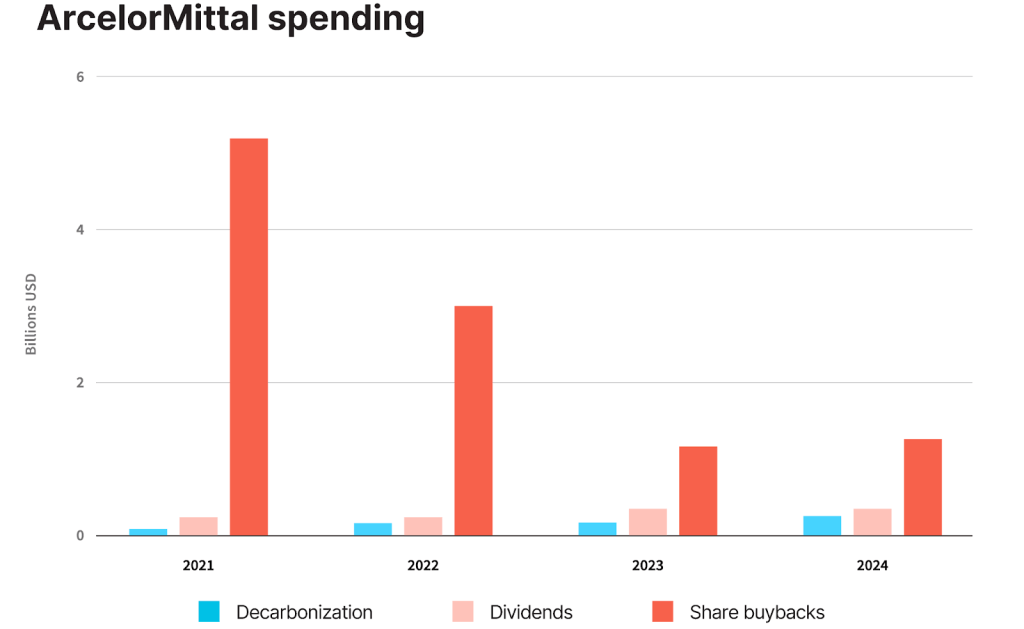
One key test of a company’s position is how it allocates capital. It’s here that ArcelorMittal’s claims about economic challenges have attracted particular scrutiny. In 2021, the year it launched its climate action plan, and the following three years, the non-profit SteelWatch estimates that Arcelor returned around $12 billion to shareholders, mainly by buying back its own shares. That dwarfs the $1 billion the company spent on decarbonization.
Arcelor framed this as returning free cash to investors — a defensible stance when decarbonization projects face so many headwinds. The view is bolstered by signs that steelmakers with more ambitious decarbonization plans are encountering obstacles. Germany’s Thyssenkrupp Steel, for example, is another with an SBTi-approved target; it recently announced plans to cut or outsource 11,000 positions from its 27,000-strong workforce.
“At the end of the day, shareholders, stakeholders, they don’t expect companies and company leaderships to destroy value,” said Davidson. “They expect you to create that.”
“In this environment, the prospect of generous investment in new productive assets may seem irresponsible,” noted Isha Chaudhary, a research director at Wood Mackenzie, a data and analytics provider. “Instead, the priority may be to continue business and eke out a profit margin as far as possible.”
The market seems to broadly agree. ArcelorMittal’s stock is up more than 150 percent over the past half-decade, comfortably outperforming the S&P 500 and in the middle of the pack relative to prices changes at other large global steelmakers, such as Nippon Steel, South Korea’s POSCO and India’s Tata Steel.
If you take a broader view of corporate responsibility, however, the 12-fold difference between funds returned to shareholders and decarbonization spending is a failure of leadership that exposes the company’s claim that it cannot invest more in clean-steel projects. “We believe they have the capital to do it,” said one steel industry analyst, who asked not to be named because they have a direct relationship with Arcelor.
Arcelor insists that it would not make economic sense to do more, but industry experts who spoke to Trellis cited opportunities. The company could build smaller hydrogen-powered steelmaking facilities than it initially planned. Or do more to transfer lower-emissions processes from Europe and the U.S. to less wealthy nations. “They could be the model of Global North bringing green technologies to Global South,” said Caitlin Swalec, director of the heavy industry program at Global Energy Monitor, a nonprofit data provider.
“What steelmakers do is start with the question of what’s feasible given today’s bottom line and today’s technology constraints,” said Caroline Ashley, SteelWatch’s executive director. “In a world where climate change is accelerating around us, we don’t actually think that’s the right question. The question should be: ‘What is essential to make our contribution to addressing climate change and where do we have to take new risks?’”
Hundreds of millions of shoes loaded with fossil-plastics reach waste bins every year in the United States. That’s why Adidas, Target and Zalando are teaming up with Fashion for Good on a collaboration to explore bioplastic alternatives for soles, which comprise 40 percent of a shoe’s mass.
“The Next Stride is a critical, collaborative intervention to de-risk the widespread adoption of high-performance bio-based alternatives for footwear soles,” said Katrin Ley, managing director at Fashion for Good, in a press statement. “By transforming the very foundation of the shoe, we address the most impactful component in its lifecycle and open the door to systemic change in the footwear industry.”
In addition to rubber derived from Hevea brasiliensis tree sap, soles often feature polyurethane, thermoplastic polyurethane (TPU) or ethylene-vinyl acetate foam. Those fossil-based materials bring a high climate burden from the start, then pollute later in an incinerator or landfill. Plus, while people walk or run, the polymers in their sneakers or slip-ons slough off microplastics.
Adidas’ Director of Sustainability Direction Gudrun Messias stated that exploring how bio-based materials may lower the environmental impact of soles “while at the same time meeting or even enhancing the high-performance standards our athletes and consumers expect from Adidas products.”
Material imperatives
Material innovations are important to decarbonizing footwear supply chains. For Adidas, for one, 87 percent of climate emissions comes from upstream activities including raw materials production.
Regulations are forcing the issue as rules come into effect in the next few years, as well. The European Union’s Ecodesign for Sustainable Products Regulation encourages footwear makers to ensure durability, reparability, recycled content and freedom from toxic chemicals. In addition, extended producer responsibility laws in Europe and California will be forcing brands to take account of their footwear waste.
The Next Stride will tackle three goals over the next 12 months. First, it will conduct life cycle assessments to understand the impacts of biomaterials, including how carbon dioxide from plant-based materials flows within the natural carbon cycle. Next, it will compare the emerging materials against traditional ones. Finally, it will examine how to drive down costs for alternative materials.
Engineering plant- and waste-based materials that last long enough for the wearer, but not too long in nature, is one challenge for the startups involved in The Next Stride:
Algenesis Labs of San Diego works on an algae-based, biodegradable polyurethane called Soleic.
Balena of Tel Aviv makes BioCir compostable thermoplastic, which has featured in Vivobarefoot and Stella McCartney designs.
Evoco of Toronto focuses on plant-based foams and bio-based TPU. Its material has appeared in Vans and Timberland styles.
Swiss startup KUORI transforms olive pits, nutshells and peels into pellets that biodegrade.
Yulex, which appears in Patagonia wetsuits, is also the name of the Arizona-California company working on natural rubber and foams.
Fruits, fungus and cinnamon tree waste are slowly stepping into the sneaker market as well. For example, Paris-based Circle Sportswear’s $140 SuperNatural Runner may have the most bio-based materials in a sneaker, including rubber in the outsole and a partly castor-bean-foam midsole.
Baking in biocircularity
“If you aim to close the loop entirely, I think biocircularity is the way to go,” said Sven Segal, founder of the Better Shoes Foundation, an open-source effort based in London.
However, new materials can bring lifeycle tradeoffs when measured against fossil materials. And some materials billed as natural reveal upon closer inspection a dependence on synthetics, such as a thin polyurethane layer on an otherwise plant- or mycelium-based “leather.”
“We have to understand, first of all, what’s their provenance, what’s the raw material?” said Amanda Johnston, curator and consultant in London at The Sustainable Angle. The nonprofit runs the annual Future Fabrics Expo, which in June in London exhibited numerous climate-forward footwear designs.
“How does it affect the broader biodiversity and the communities around it, etc?” she added. “And then you start trying to figure out, how do they process this? And then what other materials are joining the cake mix, as it were, that may compromise its sustainability further?”
Innovators are rushing to fill financial opportunities for material development, she added, and to fill gaps that have turned up in research. However, recycling and composting the materials can’t happen without the infrastructure to support them.
Shoe biz
Numerous early industry efforts are afoot to reduce the climate impacts of shoes. Since February, Fashion for Good of Amsterdam has also been engaging in its Closing the Footwear Loop project. It brings together 17 brands including Adidas, Puma, Target, On and Dr Martens to explore design for circularity, find end-of-use business models and map industry waste streams in Europe.
In addition, the nonprofit Footwear Collective for the past two years has been working with Target, New Balance, Crocs and others to promote circularity and drive down emissions. Its founder, Yuly Fuentes-Medel, has met some of the bioplastics innovators involved in the Next Stride. “I admire their work to identify new sources and new chemistries for bio-based solutions that rebuild the periodic table of polymers in footwear,” she said. “If we can scale any of these formulations to better synchronize with the entire system, everyone wins.”
“We are in this funny Wild West of materials space, which is super fascinating to go scurrying around in,” said Johnston. “I’ve never seen so much activity.”
https://sustainable-future.org/wp-content/uploads/2025/03/cropped-trellis_favicon_180x180.png3232sustainablefuturehttps://sustainable-future.org/wp-content/uploads/2024/06/Untitled-design-117-300x94.pngsustainablefuture2025-09-22 18:45:332025-09-23 18:09:27Adidas, Target and Zalando will explore bioplastics in shoes
More than 50 influential climate organizations have come together to promote a vision for a next-generation carbon market. The group, known as the Verified Carbon Market (VCM+) Coalition, aims to mobilize $100 billion in climate finance, which will be used to avoid or remove 5 billion tons of carbon dioxide equivalent emissions by 2035.
At the heart of the coalition’s vision is a market that’s larger and more unified than today’s. Rules for what constitutes high-quality credits in the current market are still emerging, for example. Companies and standard-setters are debating the role of credits in corporate net-zero strategies. The market is also divided between compliance schemes, such as the European Union’s Emissions Trading Scheme, which allow use of credits as part of mandated emissions limits, and the voluntary use of credits by companies.
The coalition will provide “connective tissue” in the form of funding and expertise to organizations working to overcome these and other barriers to scaling the market, said Alexia Kelly, managing director of the Carbon Policy and Markets Initiative at the High Tide Foundation, a coalition member. Others include the Integrity Council for the Voluntary Carbon Market (ICVCM), a leading standard-setter for credits, environmental organizations such as RMI and The Nature Conservancy, and for-profit partners including BeZero, a carbon credit rating agency.
Market-based mechanisms
Some members are known for advocating for greater use of credits to hit net-zero goals. The Science Based Targets initiative (SBTi), which maintains the most widely used corporate net-zero standard, only allows credits to be counted against the small fraction of emissions that remain at the end of a company’s journey to net zero. The initiative, which is consulting on a revision to its standard, is facing calls to relax the rules. Advocates for change say companies should be allowed more freedom to use market-based mechanisms to hit goals.
“You cannot have a target accounting standard that does not include market-based accounting,” said Kelly. “What that means is it’s really expensive and really hard, and you miss out on opportunities to help make a whole bunch of other good stuff happen.”
The coalition will also support work aimed at raising the quality of credits. Confidence in the voluntary market has been undermined in recent years by academic research and investigative journalism that exposed sometimes widespread use of credits that delivered little climate benefit. Newer initiatives, including the ICVCM, which Kelly described as providing “the global threshold benchmark for high integrity,” appear to be helping to rebuild trust.
Absent from the list of coalition members are Verra, Gold Standard and other major credit registries. Kelly said conversations with other potential partners are ongoing: “We anticipate that we’ll have additional folks joining the coalition down the road.”
NVIDIA, the world’s most valuable company with a $4.3 trillion market capitalization, is hyper-focused on energy efficiency. It claims the world could save 40 trillion watt-hours of electricity annually by using technology accelerated with its graphics processors.
That message is meant to resonate with NVIDIA’s biggest customers — including Amazon Web Services, Google and Microsoft — which desperately need to speed up AI processing times to have any hope of reaching their emissions reduction pledges.
Compared with rivals Advanced Micro Devices and Broadcom, however, NVIDIA’s broader corporate sustainability strategy is immature. Those other companies have worked on emissions reductions in their operations and supply chains for at least five years. NVIDIA’s first emissions reduction targets were validated in early 2025.
NVIDIA’s new joint development partnership with Intel changes the equation, providing the AI chip leader with access to two decades of institutional knowledge about reducing the emissions, waste and water usage associated with making computer chips.
Fast-growing footprint
NVIDIA’s greenhouse gas emissions doubled from 2023 to 2025, to 6.9 million metric tons of carbon dioxide equivalent, according to its 2025 sustainability report. Its first absolute emissions reduction target, disclosed in June, calls for a 50 percent cut for its operations (Scope 1) and electricity consumption (Scope 2) by 2030.
Those emissions are essentially a rounding error in the company’s total carbon footprint: less than 1 percent. That’s because NVIDIA is a “fabless” company, meaning it relies on other companies to manufacture its chips. The other big impact for NVIDIA is the energy its chips use to train AI learning models and run generative AI applications. Both of these fall into Scope 3.
To get a handle on where it might be able to influence cuts in that footprint, NVIDIA committed two years ago to encouraging two thirds of its suppliers to adopt validated emissions reduction targets by 2026. It surpassed the supplier engagement goal a year early with 80 percent for the fiscal year ended Jan. 26.
NVIDIA hasn’t set an absolute reduction target for its Scope 3 impact. Instead, it has pledged to reduce the emissions intensity from use of its products by 75 percent per PetaFLOP, or one quadrillion floating-point operations per second. “Reducing energy and emissions per computation represents NVIDIA’s biggest opportunity to reduce emissions and to support global sustainability efforts,” the company said in its report.
NVIDIA plans to start reporting on its new intensity metric in 2026, along with a more comprehensive inventory of its most significant emissions sources.
Best practices to share
Against that backdrop, Intel’s work on reducing the emissions, water usage and waste associated with manufacturing operations will be a benefit when the two start making the new chips promised under their agreement announced Sept. 18. Their $5 billion partnership centers on two areas: data center technology that combines NVIDIA and Intel technology in custom AI offerings and an integrated processor for personal computers.
Intel’s overall carbon footprint is more than triple that of NVIDIA’s at 25.1 million metric tons. But it would be far larger without the billions of dollars the company has invested in chemical substitutions, energy conservation and process optimization. Intel issued a $1.25 billion green bond in 2022 to pay for these investments; it allocated $845 billion of that amount as of its latest report.
Those investments are paying off: Intel has cut absolute emissions by 70 percent since its peak year in 2006. It’s looking for another 10 percent reduction before 2030.
About 4 percent of Intel’s emissions come directly from the company’s offices and manufacturing plants, along with the energy necessary to run them, as of Intel’s 2024-2025 corporate responsibility report. Intel estimates that impact would be about 10 times larger without the investments it has made over the past two decades to cut the emissions associated with semiconductor manufacturing.
Energy conservation is a huge factor in the reductions that Intel has been able to achieve. Between 2020 and 2024, Intel reduced its electricity consumption by 2.4 billion kilowatt-hours. The cost for those projects: $104 million. The money saved: $150 million.
Shared goal: Run chips with less energy
Intel shares NVIDIA’s belief that improving the energy efficiency of its processors will be key to reducing Scope 3 emissions. The company estimates that the chips that it sold in 2024 will contribute 3.2 million metric tons of emissions annually.
To reduce that number, Intel has pledged to increase the energy efficiency of its chips by tenfold between 2019 and 2030. NVIDIA also strives for continuous improvements but hasn’t publicly declared a similar goal.
https://sustainable-future.org/wp-content/uploads/2025/03/cropped-trellis_favicon_180x180.png3232sustainablefuturehttps://sustainable-future.org/wp-content/uploads/2024/06/Untitled-design-117-300x94.pngsustainablefuture2025-09-22 14:49:382025-09-22 18:08:51How NVIDIA will benefit from its $5 billion Intel investment
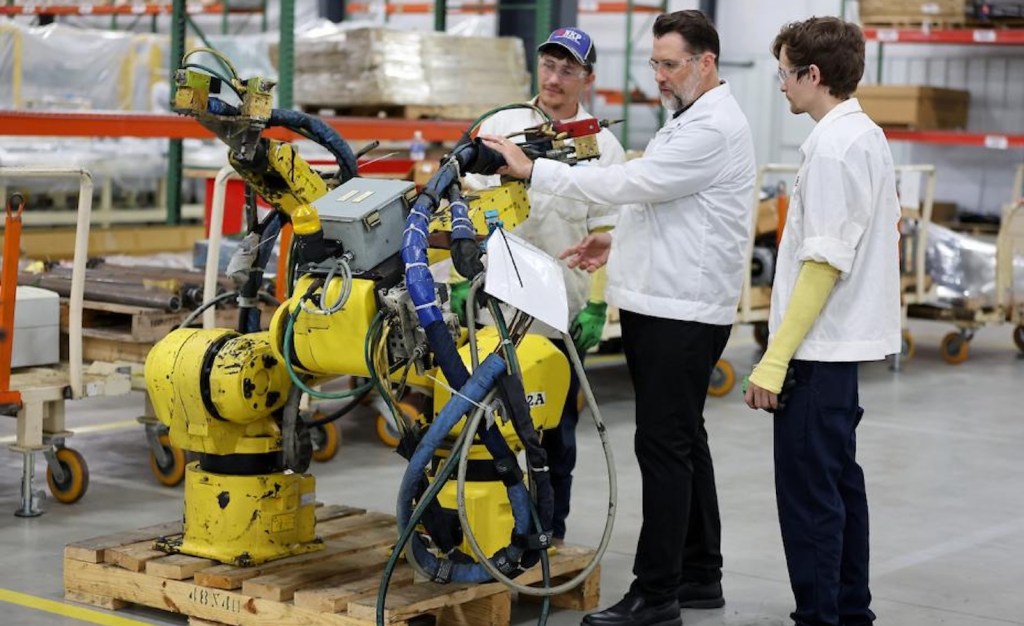
Honda has opened a circular economy center in the heart of Ohio to recycle and repurpose auto manufacturing components. Opened on Sept. 18, the Resource Circularity Center is located between the company’s Marysville and East Liberty auto plants and is thought to be the first dedicated effort by a carmaker to give a second life to things like wrenches, robotics and office chairs, as well as car parts and aluminum wheels.
“What really excites me the most is how can we learn and even unlearn things that we typically experience throughout our acquisition process,” said American Honda Director of Procurement Sustainability Matt Daniel. “We’re really trying to treat the waste that we have not so much as an end, but as a resource that we can recirculate and move back into our operations.”
The Midwest operation opens at a time of renewed focus by policymakers and business leaders on strengthening domestic supply chains, especially as tariffs stress the import-export webs of manufacturers. As transportation has electrified in fits and starts, so have hopes for hubs to recycle electric vehicle batteries in North America. Yet other circular strategies are moving forward in automakers’ long-term plans to drive down climate emissions from their extractive supply chains.
“For it to be sustainable, it has to be both financially beneficial and good for the environment,” Daniel said. “What we’ve learned through this whole thing, at least initially, is there’s a lot more opportunity than we realized.” For example, typically Honda paid a third party to take spent electronics, but now it has found potential takers for free.
Is there gold in circular supply chains?
The high value of parts for repairs and remanufacturing has enabled an independent automotive recycling and dismantling industry to thrive for generations, noted Emil Nusbaum, vice president of strategy, government and regulatory affairs at the Automotive Recyclers Association in Washington, D.C. Moving forward, recovering critical minerals from onboard electronics and batteries presents new opportunities and challenges.
“It’s a reflection of a changing environment where there really is an emphasis on sustainability,” Nusbaum said. “It’s great to see that car manufacturers are starting to recognize the value in reusing, repurposing, and remanufacturing parts and equipment in their supply chains. This helps maximize existing resources and reduce waste.”
Honda’s news follows a move by Toyota Group’s procurement and logistics house in July to purchase steel recycler Radius Recycling of Portland, Oregon. Radius has sites for self-service automotive recycling as well as scrap recycling and vehicle shredding.
“Building on our longstanding relationship, this acquisition will help expand our circular economy initiatives, enhance the supply of high-quality recycled resources and deliver better solutions for our customers and our planet,” stated President and CEO Naoyuki Hata of Toyota Tsusho, a subsidiary of Toyota Group, whose targets for carbon neutrality by 2050 are validated by the Science-based Targets initiative (SBTi). Toyota aims to reduce climate emissions by 30 percent across its supply chain, logistics and dealerships.
Driving decarbonization
Honda’s circularity center is not about car-to-car recycling. However, Daniel is studying alignment with the company’s “horizontal” recycling strategy to recover value for new products from end-of-life vehicles. “Whether it’s an industrial motor, or a robot that we’re focused on on the indirect side of a vehicle,” he said, “in many cases we’re talking about the same raw materials, steel, aluminum, through various grades, copper and plastics.”
The work serves Honda’s corporate strategy of carbon neutrality by 2050. (Honda submitted a net zero target several years ago under an earlier framework of the SBTi.) By that year, the brand also hopes to reach zero industrial waste and purchase 100 percent materials that are either “recycled, reused or otherwise lower-impact.”
Inside the Honda Resource Circularity Center. Credit: Honda
Evolving circular procurement
American Honda’s CEO Noriya Kaihara two years ago asked Daniel to lead the creation of a resource-circulation “roadmap” for indirect goods.
“He grabbed a table and a chair in a conference room out in California, and he said, ‘For things like this,’” Daniel said. “And that was basically all I had to work with. I said, ‘Well, that’s great. I’ve got two questions: One, what is resource circulation? And two, why me? I’m a procurement guy and spent my whole career acquiring things, and now you want me to figure out how to get rid of things.’”
That led Daniel and a handful of others to create the circularity center. They prioritized recovering steel, aluminum, copper; equipment and spare parts that service it, as well as parts within its dealer network.
As items arrived in cardboard, polystyrene or plastic bags, the group explored creative and potentially profitable reuses for packaging, too.
More than a century ago, Ford fashioned charcoal from sawmill waste leftover from the hardwood that made up Model Ts. That later spawned the Kingsford brand. “That mindset is what we’re trying to replicate within our circularity center,” Daniel said.
Honda’s center shares elements of municipal sorting plants for curbside-collected bottles and cans. “It’s a little bit cleaner, though,” Daniel said. Nearby logistics company NK Parts handles and sorts materials. An AI tool scrapes data from supplier websites to speed up identification.
If there’s no internal purpose for waste that reaches end-of-use at Honda facilities, Daniel’s team turns to partners, potentially including eBay. The center will also dismantle and recycle service parts from Honda dealerships around the country.
Another Honda project has investigated turning scrap leather from a seating factory in Mexico into new items, like luggage tags. Other circularity efforts involve chemical sorting, nylon recycling, closed-loop plastics and rare earth reuse technologies.
Daniel believes the resource center’s benefits can apply to other industrial goods businesses facing tremendous cost pressures. There’s always more room to shave waste from a supply chain, he said. “Looking across the company for those opportunities to consolidate and have a set strategy is really going to pay dividends in the long run.”
https://sustainable-future.org/wp-content/uploads/2025/03/cropped-trellis_favicon_180x180.png3232sustainablefuturehttps://sustainable-future.org/wp-content/uploads/2024/06/Untitled-design-117-300x94.pngsustainablefuture2025-09-22 14:25:302025-09-22 18:09:06Honda circularity center opens in Ohio
The opinions expressed here by Trellis expert contributors are their own, not those of their companies or Trellis.
A couple years ago, when Van and his colleague presented before Microsoft’s Sustainability Connected Community, they weren’t delivering a typical corporate presentation. Instead, they were educating fellow employees about how their company’s membership in the U.S. Chamber of Commerce was actively undermining the climate goals they cared about. After several months of a campaign explaining the Chamber’s history of fighting climate legislation, hundreds of Microsoft employees were ready to sign their “Escape the Chamber” petition, ultimately spurring the company to conduct a public audit of its trade association memberships.
Meanwhile, across Silicon Valley, Sam faced a different challenge at Alphabet. Despite working for one of the most forward-thinking companies in tech, he discovered that every single retirement investment option in their 401(k) included oil and gas stocks. His campaign to change this — complete with financial analysis, an employee petition, and stakeholder meetings — eventually led Alphabet to add its first fossil-fuel-free retirement option.
Collectively, we represent more than 15 years working in tech. And while neither of our day jobs involves sustainability, we’ve become seasoned advocates for climate action in our workplaces. Our experience reflects a growing movement of employee advocates pushing for change from within some of the world’s most influential companies.
The rise of workplace climate advocacy
Data confirms what we’ve witnessed: Employee climate engagement is surging. A 2024 survey of more than 1,700 professionals found that 77 percent of employees are unhappy about their employers’ lack of climate action. And according to Deloitte’s 2023 CxO Sustainability Report, 59 percent of leaders say employee activism caused them to increase sustainability efforts, with nearly a quarter describing the impact as substantial.
This represents a fundamental shift in how climate advocacy happens — from external pressure to internal organizing — despite significant headwinds facing ESG initiatives that have forced many companies to dial back public sustainability commitments.
After years of campaigns, petitions and stakeholder meetings, we’ve learned that successful employee climate advocacy requires more nuance than most people expect. Specifically:
Don’t assume the sustainability team will automatically be interested
This might be our most surprising lesson: Your company’s official sustainability team may not immediately embrace grassroots efforts. When Van’s group initially approached Microsoft’s sustainability department about their U.S. Chamber of Commerce campaign, they encountered unexpected resistance. The sustainability team was focused on hitting specific carbon reduction targets and worried that a public campaign against trade associations could complicate their relationships with key stakeholders. They weren’t being obstructionist because they had legitimate concerns about how an employee campaign might affect their ability to work with industry partners on carbon reduction initiatives. Thus, Van and his colleagues had to demonstrate that their approach would actually support their goals and not undermine them.
The lesson: Sustainability teams are juggling multiple priorities and stakeholder relationships. Employee advocates need to make a compelling business case showing how their initiative advances — rather than competes with — existing sustainability efforts.
Lean on outside experts and external resources
Both of our campaigns found breakthroughs came from partnering with established climate organizations. Sam’s fossil-free 401(k) campaign exemplifies this perfectly. Instead of building financial arguments from scratch, his team partnered with As You Sow, a nonprofit specializing in shareholder advocacy and sustainable investing.
As You Sow provided comprehensive research on fossil-fuel-free fund performance, analysis of fiduciary duty considerations, and template language for the internal business case. They also connected the Alphabet team with employees at other companies who had run similar campaigns.
Sam estimates they probably saved six months of research time by partnering externally. In addition, having a credible external partner gave the Alphabet campaign legitimacy. They weren’t seen as just passionate employees with an idea, but employees who were presenting research-backed recommendations from recognized experts.
The lesson: Finding credible outside experts and organizations to help boost your argument can go a long way, and save you time.
Recognize that building community is harder than you think
Everyone knows building community is important, but few appreciate how challenging it becomes in the modern workplace. In an era of Slack overload and meeting fatigue, creating sustained engagement around any cause requires serious strategy.
Both of our successful campaigns recognized that people need multiple ways to engage at different commitment levels. Microsoft’s Sustainability Connected Community created what Van calls an engagement ladder — from email subscribers to active chapter leaders. New members might start by attending virtual presentations, then join working groups and eventually take on leadership roles.
Successful community building requires infrastructure, from dedicated Slack channels to regular programming to clear pathways for involvement. We’ve both learned to celebrate small wins and maintain momentum during setbacks. After all, creating change in a corporate environment is a marathon, not a sprint. And the community you do build is what sustains you through the long stretches where it feels like nothing is happening.
The lesson: Don’t assume passion translates into sustained participation. Just because people care about climate change doesn’t mean they’ll automatically show up to meetings and volunteer.
The way forward
As employee climate advocacy continues growing, our experiences at Microsoft and Alphabet offer a template for others. The most successful efforts combine external expertise with internal community building, approach sustainability teams as potential allies rather than automatic supporters, and focus on concrete, achievable goals that align with broader business objectives.
As traditional ESG initiatives face headwinds, employee-driven climate action may represent the most sustainable path forward for corporate environmental progress. For employees ready to take action, our message is clear: Find your partners and don’t be discouraged if progress comes slowly. The most important climate work in corporate America may not be coming from the C-suite. Instead, it’s coming from passionate employees who refuse to wait for someone else to solve the problem.
https://sustainable-future.org/wp-content/uploads/2025/03/cropped-trellis_favicon_180x180.png3232sustainablefuturehttps://sustainable-future.org/wp-content/uploads/2024/06/Untitled-design-117-300x94.pngsustainablefuture2025-09-22 10:00:002025-09-22 18:09:06The employee climate advocacy playbook: Lessons from inside Microsoft and Alphabet
The opinions expressed here by Trellis expert contributors are their own, not those of Trellis.
For many companies thinking about climate change, carbon accounting is hot right now.
But most of the attention focused on accounting is really about improvements to existing carbon reporting frameworks. Both reporting and accounting have important roles to play in the push for decarbonization, but failing to understand the difference between the two will lead to compromised emissions management approaches that don’t stand a chance of arriving at their desired net-zero destinations.
We know this because reporting has been driving emissions information for the past three decades and yet greenhouse gases continue to rise and carbon markets continue to falter. The distinction may at first appear trivial but when it comes to climate, the difference between reporting and accounting frameworks marks the difference between hitting targets versus simply setting them.
Terminology 101
Climate-related reporting is a more general phenomenon than accounting. Reports can be based on qualitative disclosures, quantitative numbers, such as Scope 2 and Scope 3, that have no underlying basis in an accounting-system, or on accounting-based numbers. Greenhouse gas reporting frameworks count emissions according to a standardized set of rules to produce documentation that’s useful for three primary activities:
Fulfilling a policy or voluntary requirement such as inventories and disclosure
Enabling advocacy
Documenting emissions alignment such as matching inventories to targets
Carbon accounting, on the other hand, requires every anthropogenic emission to be counted and fully allocated. The numbers must be accurate, verifiable, comparable, mutually exclusive across arm’s-length entities, collectively exhaustive and policy agnostic. In fact, only once policy-agnostic accounting has been put in place can emissions information-based laws and regulations be effective in steering high-emitting sectors through a decarbonization transition.
The primary purpose of a carbon accounting framework is to inform capital allocation decisions. It serves three critical functions:
Unlocking investment for decarbonization through performance-based competition
Facilitating demand for carbon removal through asset-liability matching
Reporting and accounting are neither inherently “bad” or “good,” but their application in specific contexts lead to different outcomes. In the case of greenhouse gases, reporting frameworks allow emissions (and reductions) to be counted multiple times or in some cases, not at all. Such indeterminate overcounting (or undercounting), along with the allowable use of estimates, averages and flexible boundaries, prevent competition for decarbonization while also obstructing the advancement of carbon removal that scientists deem necessary.
Reporting frameworks, which range from ISO standards to the Greenhouse Gas Protocol, allow emissions to exist on multiple “ledgers” at once and disappear by moving them beyond the reporting boundary. Companies can use reporting frameworks to produce “balance sheets” where emissions are labeled as “assets” and traded in the form of an avoidance. This is what makes the reporting/accounting paradigm so confusing; the terminology sounds the same but their effect on global emissions management is dramatically different.
In an accounting system, ledgers are used to record all anthropogenic emissions and can be added up to form a single record of global carbon stocks and flows. The E-ledgers Institute’s algorithm (of which I sit on the board) uses three types of journal entries. One to account for purchased emissions that transfer between a seller and a buyer; another for direct emissions transferred between the emitter and a geological carbon equity account; and a third to allocate emissions within a company to its products.
In the E-ledgers framework, emissions are recognized as E-liabilities and only removals can be recognized as E-assets. All emissions are counted only once so that at the geological scale assets = liabilities + equity.
Implications for carbon markets
Perhaps the most important distinction between reporting and accounting frameworks is their implications for carbon markets.
Carbon markets built on reporting systems lack integrity and enable a kind of shell game in the form of credit boundary design. That’s because reporting systems lead buyers and sellers to make claims based on reputational authority. Reputational authority is primarily derived from narrative arguments over additionality, permanence and leakage. The result: Carbon markets built on reporting frameworks are self-referential, highly gameable and prone to collapse.
The voluntary market was designed to be “better than nothing” in the absence of climate regulation. They offered a way to finance mitigation before governments acted, to reward early movers and to mobilize capital around a shared sense of urgency. To drive toward net zero, however, carbon markets can no longer depend on credibility narratives. They need something more stable, such as the laws of physics.
A carbon market built on an accounting system facilitates instruments with atmospheric authority — verifiable increases in carbon reserves that are tied to durable reduction of atmospheric emissions. Just as important, and more immediately, an accounting-based market facilitates investment in avoided emissions by capitalizing performance improvements in the form of lower E-liabilities. And through the principle of impairment, accounting provides guidance for recognizing and replacing a sudden loss in asset value thereby enabling the pursuit of permanence while opening markets for nature-based carbon removal.
Accountability: The ultimate imperative
Only an accounting system can provide a true and fair basis against which regulatory and voluntary mechanisms can durably hold emitters accountable. Feasible accountability mechanisms, such as carbon-border adjustments, product-intensity standards, supplier contracts and auditable voluntary net-zero claims, are ready for action.
Although sustainability professionals working today might not connect the dots to recent history, the U.S. stock market crash of 1929 and subsequent global depression was caused in part by a lack of accountability, as firms reported whatever profits, expenses, assets and liabilities they pleased. Then a group of committed academics, accountants, executives and philanthropists got together to create the Generally Accepted Accounting Principles (GAAP). Financial accounting standards have endured because they enable decision-making and accountability. They allow investors to allocate capital based on accurate and comparable information rather than self-referential reputational claims.
To hit net zero targets, firms need GAAP for climate. Those defending carbon reporting frameworks are understandably afraid and skeptical. But steering with reporting frameworks won’t drive down emissions in the real economy. For that we need accounting. It’s a boring, centuries-old technology — but it’s the only one capable of filling the gap between ambition and action.
https://sustainable-future.org/wp-content/uploads/2025/03/cropped-trellis_favicon_180x180.png3232sustainablefuturehttps://sustainable-future.org/wp-content/uploads/2024/06/Untitled-design-117-300x94.pngsustainablefuture2025-09-19 10:00:002025-09-19 18:08:26How to overhaul carbon accounting to save net zero
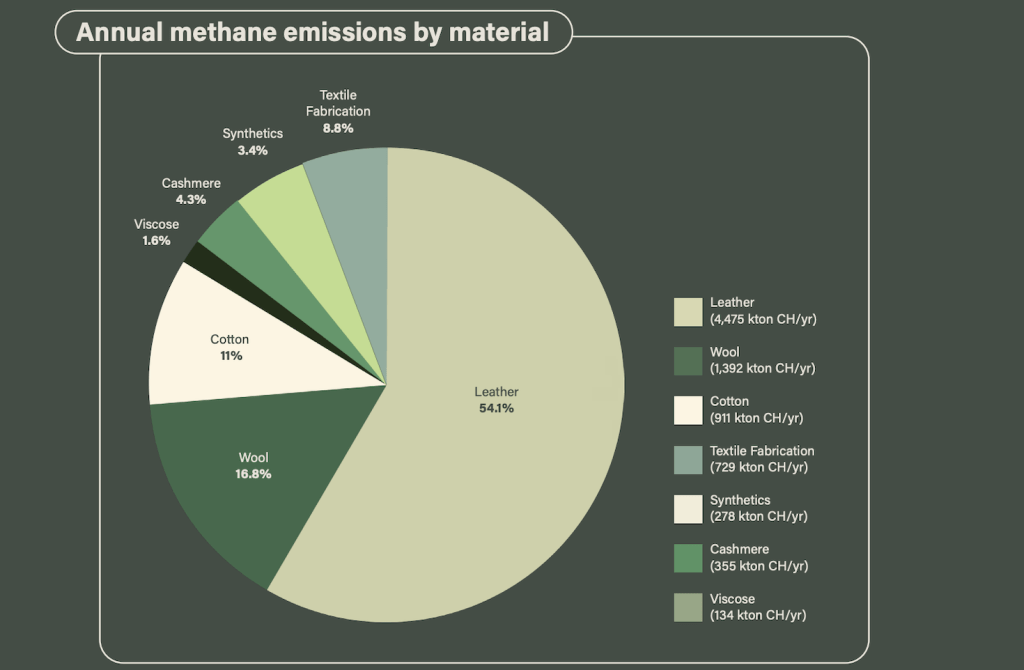
Cows, sheep and goats are culpable for most of fashion’s methane emissions, according to a new report. Leather, wool and cashmere produce 75 percent of the industry’s super-pollutant although they only make up 3.8 percent of its overall materials, the nonprofit Collective Fashion Justice has found.
There’s been scant focus on fashion’s methane footprint, as net-zero efforts mostly center on carbon dioxide. However, if the industry fails to slash methane by at least 30 percent, those emissions will be equivalent to the emissions of France in 20 years, warned the Sept. 15 report, “Now or never: A first methane footprint for the fashion industry.”
And as brands have churned out more fashions, faster, over the past half decade, the industry’s greenhouse gas emissions from raw materials leaped by 20 percent, according to the Textile Exchange’s 2025 Materials Market report released Sept. 18.
Collective Fashion Justice urges businesses to opt for recycled sources instead of new animal products. “When we look at a whole host of environmental factors, recycled wool, plant-based materials and other non-animal and non-fossil materials typically perform far better overall,” said Emma Håkansson, the group’s founder and director.
The fix?
The organization’s findings — and its call to halt the use of virgin materials — continue longstanding debates over the lifecycle impacts of raising animals for leather and textiles. They also raise the question of what brands can realistically achieve today, given the relative scarcity of lower-carbon materials.
Nor should companies favor fossil synthetics instead, Håkansson added. “This is not an either-or situation. We must move beyond our reliance on both of these unsustainable material sources,” she said.
Moreover, Håkansson says that even when brands use third-party certified, climate-friendly practices — standards from the Leather Working Group, Responsible Wool and Good Cashmere — very little is improved. With wool, for instance, they neither address the land footprint nor the methane from sheep exhaling and passing gas, in her estimation. The same applies to leather, which depending on one’s perspective is either an innocent byproduct or an enabling “co-product” of the beef industry.
That said, some experts take issue with the report’s conclusions.
Methane is important but needs to be contextualized relative to the industry’s total greenhouse gas footprint, according to Joël Mertens, director of Higg Product tools at Cascale. The Oakland, California, nonprofit, formerly the Sustainable Apparel Coalition, counts large brands among its 300 member organizations.
Credit: Collective Fashion Justice
“Within that context,” said Mertens, “the total greenhouse gas emissions of animal-derived raw materials (including sheep wool, cashmere and leather) account for a much smaller portion of industry emissions; just under 3.5 percent. By comparison, impacts relating to garment manufacturing are 8 percent, and textile dyeing and finishing are 55 percent.”
Lightening leather
Leather creates 54 percent of the industry’s methane, followed by 16.8 percent for wool and 4.3 percent for cashmere, according to Collective Fashion Justice.
Leather uses waste hides from the beef industry, which the United Nations says is responsible for 14 percent of global climate emissions. Most of its footprint comes from cattle raising, which drives deforestation. Tanning and finishing bring more pollution.
And numerous innovators are engineering new materials to mimic leather by using mycelium, apples and cacti, but still in small volumes.
Woolly impacts
Wool comprises .9 percent of fibers in fashion but spews disproportionate emissions and hurts biodiversity, according to the methane report.
John Roberts, managing director of Woolmark in Australia, begs to differ. “Wool is a natural, renewable, biodegradable and recyclable fiber,” he said. Producers are exploring feed additives such as algae, as well as sheep breeding and farm efficiencies to cut emissions.
The beef industry is, too. However, wool differs from chemically intensive leather making.
“Wool itself is composed of 50 percent organic carbon by weight, which is naturally sequestered from the atmosphere by the plants that sheep eat,” said Nica Rabinowitz, the Climate Beneficial Verified and supply chain development manager of Fibershed, which helps farmers adopt regenerative practices.
Recycled wool slashes CO2 by 94 percent compared with virgin fiber, according to Patagonia. The brand, alongside VF Corporation’s Smartwool and Icebreaker, is also among the larger buyers of Responsible Wool Standard wool.
In other second-life wool practices, Eileen Fisher patches and reworks marred sweaters and sources recycled material from ReVerso in Italy, which also sells to Patagonia, Gucci and Stella McCartney.
Cutting cashmere
Cashmere is only found in .02 percent of materials in fashion, according to the Textile Exchange. However, the fiber has a far greater methane intensity per kilogram than leather and wool, the report found.
Among brands tackling its footprint: Los Angeles-area company Reformation eliminated virgin cashmere entirely from its collections. It sources deadstock for sweaters and trims.
And one more thing
Beyond the materials, Collective Fashion Justice demanded for companies to tackle the 20 percent of fashion’s methane, which comes from material processing and fabrication in supply chains that rely heavily on coal and gas.
“Brands must also switch to renewables across their value chains and support manufacturing partners to do so,” Håkansson said.
Efforts in progress include the Future Supplier Initiative by the Fashion Pact and the Apparel Impact Institute, which have signed on H&M, Group, Gap and others to directly fund suppliers’ renewable energy transitions.
https://sustainable-future.org/wp-content/uploads/2025/03/cropped-trellis_favicon_180x180.png3232sustainablefuturehttps://sustainable-future.org/wp-content/uploads/2024/06/Untitled-design-117-300x94.pngsustainablefuture2025-09-18 20:55:492025-09-19 18:08:42Blame leather, cashmere and wool for most methane in fashion, report says