The opinions expressed here by Trellis expert contributors are their own, not those of Trellis.​

For over a decade, “move fast and break things” has been the defining ethos of innovation. Popularized by Facebook and widely adopted across the tech sector, this mantra encouraged speed, experimentation and disruption over caution, regulation or long-term impact. 

For many leaders, speed to market was the imperative and negative consequences were just an unfortunate side issue. Of course, learning from failure is critical to any effective innovation.

But what happens when what we break can’t be repaired?

That’s the situation we face as climate change, declining public trust and widening inequality are no longer edge scenarios, but existential business risks. In this context, the innovation playbook forged in the last two decades looks increasingly anachronistic. Fast and broken is no longer acceptable. Speed alone, detached from purpose and consequence, is unsustainable innovation. And breaking things without accountability is not inventive — it’s negligent.

The innovation-ethics gap

Too often, innovation teams at large companies operate in deliberate isolation in an effort to replicate startups that are quick, creative and agile. Ethics, compliance and sustainability teams are often perceived as obstacles and compliance checkers: slow, cautious and adversarial. These siloes are toxic, ensuring harm only becomes visible when it’s too late.

Consider what’s happening now with AI development. Companies are racing to release increasingly powerful tools, often trained on biased datasets, without sufficient consideration as to how these tools could affect marginalized communities or democratic institutions. 

Predictions that AI ethicists will be in huge demand haven’t materialized so far — instead, there’s widespread concern about “over-regulation.” Similarly, green tech startups, hawking e-scooters to solar products, have emerged with revolutionary ideas, such as batteries relying on minerals mined under ethically questionable conditions, only to face backlash when their supply chains reveal human rights violations or environmental degradation. Such firms have tended to assume that their environmental license to operate is sufficient, which means they may have overlooked their community and social impacts from the beginning.

This disconnect isn’t malicious, it’s systemic: Ethical questions only surface after prototypes launch. In most corporate innovation processes, there’s simply no forum or capability to consider them. As societal trust in business continues to disintegrate, the move-quickly-and-break-things model is becoming more obsolete. Instead, innovation and ethics must collaborate from the outset, not treat each other as afterthoughts. In a world of cascading risks and eroding trust, that is not just a moral imperative; it’s a competitive advantage.

Rethinking innovation 

So what does this look like in practice?

First, ditch hero-driven innovation led by one superstar. Research shows individual outperformance at one company often doesn’t translate to a new firm, because teams and creative processes are the real competitive advantage. Innovation needs to be cross-functional, systemic and open to debate. Success shouldn’t be framed only in speed or adoption, but should account for societal outcomes and unintended consequences.

LEGO’s “System in Play” approach is a compelling model to demonstrate this. Its innovation success is built on collaborative, cross-functional teams that include diverse stakeholders from R&D, marketing, customer experience and external partners such as community representatives and end users. These teams co-create solutions through iterative workshops and design sprints, continuously integrating feedback from the communities they serve to ensure relevance and impact. Rather than relying on isolated “star” innovators, this model fosters shared ownership and collective problem-solving, harnessing creativity from multiple perspectives to drive sustainable innovation.

Second, choose a relevant metric beyond speed. In enterprise innovation environments, we’ve seen speed-to-market prioritized above all else. But what if the most innovative ideas are those that balance agility with anticipation? That optimized not just for adoption, but for sustainable impact? IKEA’s innovation labs, such as Space10, explicitly prioritize and value long-term design thinking and regenerative principles over short-term delivery, proving that meaningful innovation can still move with intention.

Third, consider unintended consequences. Progressive organizations embed foresight into their agile cycles: mapping second- and third-order effects on the environment and society, inviting ethicists early in design sprints and stress-testing ideas against potential regulatory and social backlash. This isn’t about perfection or paralysis. It’s about expanding the innovation lens beyond feasibility and desirability to include responsibility. For example, Paula Goldman, chief ethical and human use officer at Salesforce, oversees “consequence scanning,” where the social impact of new products is evaluated before a launch.

Fourth, include new approaches. We need to equip teams not only with canvases and user journeys, but with impact assessments, ecosystem mapping, life cycle assessments and frameworks that view future generations as stakeholders. These tools don’t slow innovation; they strengthen its foundations. Interface, the modular flooring company, pioneered life cycle assessments as a core innovation tool, using environmental impact data to guide product design, material selection and circularity efforts from the outset. L’Oreal also uses a product environmental analysis to ensure new formulations have lower impact than previous ones.

Finally, empower ethical and sustainability teams. Instead of acting as compliance gatekeepers or powerless messengers, they have an opportunity to engage as collaborators and facilitators helping to shape the conditions for innovation. This may require new skills, new alliances and, more critically, executive understanding that responsibility and innovation are not antithetical.

A new innovation ethos

Disruption is inherently reactive; it thrives on tearing down. But stewardship is generative and requires vision, accountability and care. In this new paradigm, innovation isn’t about simply outpacing competitors. It’s about creating value that lasts economically, socially and environmentally. 

Therefore, we must rewrite innovation’s vocabulary:

  • From “fail fast” to “learn fast and reflect often.”
  • From “build, measure, sell” to “anticipate, co-create, test, progress.”
  • From “MVPs” to “minimum responsible products (MRPs)” designed for sustainability, inclusion and long-term impact.

Already, we’re seeing early signals of this shift. Patagonia has shown how product innovation aligns with environmental stewardship by being one of the first retailers to use recycled polyester and organic cotton in its products and establishing a secondhand program that encourages repairing, reusing and recycling clothing. 

But innovation transformation isn’t just about products. It’s about systems, mindsets and culture. It demands humility, openness to critique and an ability to ask “Should we?” before “Can we?”

Evolve or be left behind

Let’s be clear: This is not a call for less innovation. It’s a call for better innovation that’s deliberate, systemic and socially accountable.

Bold thinking remains essential. But the architecture of innovation must shift from singular heroism to collective creativity and stewardship. From short-term wins to long-term resilience. From speed-to-market as a goal to speed-to-impact as a principle.

This isn’t a philosophical shift. It’s a business one. Markets are demanding accountability. Regulators are catching up. Employees and customers are watching. Leaders who continue to view innovation as a siloed, ungoverned playground will soon find themselves outpaced by those who build for durability, trust and legitimacy.

If you lead innovation today, your job is to anticipate systems impact, integrate ethical perspectives and build outcomes that won’t collapse under scrutiny. That means new tools, new metrics and new collaborations — with people who are trained to challenge your assumptions, not validate them.

So ask yourself and your team this:

  • What are we incentivizing and what are we ignoring?
  • What harm might our solution create and who bears it?
  • Are we designing for resilience or just reaction time?

Sustainable innovation isn’t slower. It’s smarter. And in an era defined by compounding risk, complexity and public scrutiny, it’s the only kind of innovation that will survive.

The post It’s time to ditch the ‘move fast and break things’ innovation playbook appeared first on Trellis.

The number of companies with validated, science-based plans for cutting greenhouse gas emissions represents 41 percent of global market capitalization (as of the end of June), up 2 percent from the end of 2023, according to a new analysis.

The report, released by the Science Based Targets initiative (SBTi) on Aug. 14, found that close to 11,000 companies had validated near-term reduction plans or full-fledged corporate net-zero commitments by the end of the second quarter. That’s an increase of 227 percent over the past 18 months.

SBTi manages frameworks that shape corporate greenhouse gas emissions reduction strategies. Almost 40 percent of the companies with current SBTI commitments are working toward both near-term goals and long-term net-zero pledges, compared with 17 percent at the end of 2023.  

The findings run counter to the narrative that businesses are abandoning their strategies to address climate change, said SBTI CEO David Kennedy. 

“Smart companies continue to see a strong business case for managing transition risk,” Kennedy said. “Building climate action into commercial strategy helps maintain competitiveness now and in the future, and allows companies to capitalize on opportunities in the low-carbon economy.”

Some high-profile companies that announced plans to set net-zero targets earlier this decade have pushed pause while the nonprofit overhauls its rules guiding corporate net-zero commitments. (A finalized version isn’t anticipated until late 2026.) In the meantime, corporations can continue to adopt targets for 2030 or earlier using SBTi’s existing guidance.

More than 1,400 companies set net-zero targets by mid-2025. Source: SBTi

Industrial manufacturers account for one-third of companies with SBTi-validated targets; more than half of them had their targets approved in the 18-month period assessed by consulting firm Oliver Wyman, which conducted the analysis for SBTi. 

Asia’s big move

Businesses from China, Hong Kong, Japan, Korea, Taiwan and Thailand accounted for much of the growth. The number of Chinese companies with validated targets reached 450, compared with 137 at the end of 2023. 

Many of the Asia-Pacific companies are encouraging their suppliers and business partners to set targets, too. As a result, “Asia is becoming a powerful amplifier of climate ambition, catalyzing a broader wave of science-based target-setting,” SBTi said.

The post 11,000 and counting: SBTi touts uptick in corporate emissions-cutting plans appeared first on Trellis.

In many industries, artificial intelligence is being hailed at a game changer. But a recent survey of sustainability professionals shows enthusiasm for the potential of AI to aid in positive sustainable outcomes isn’t exactly winning.

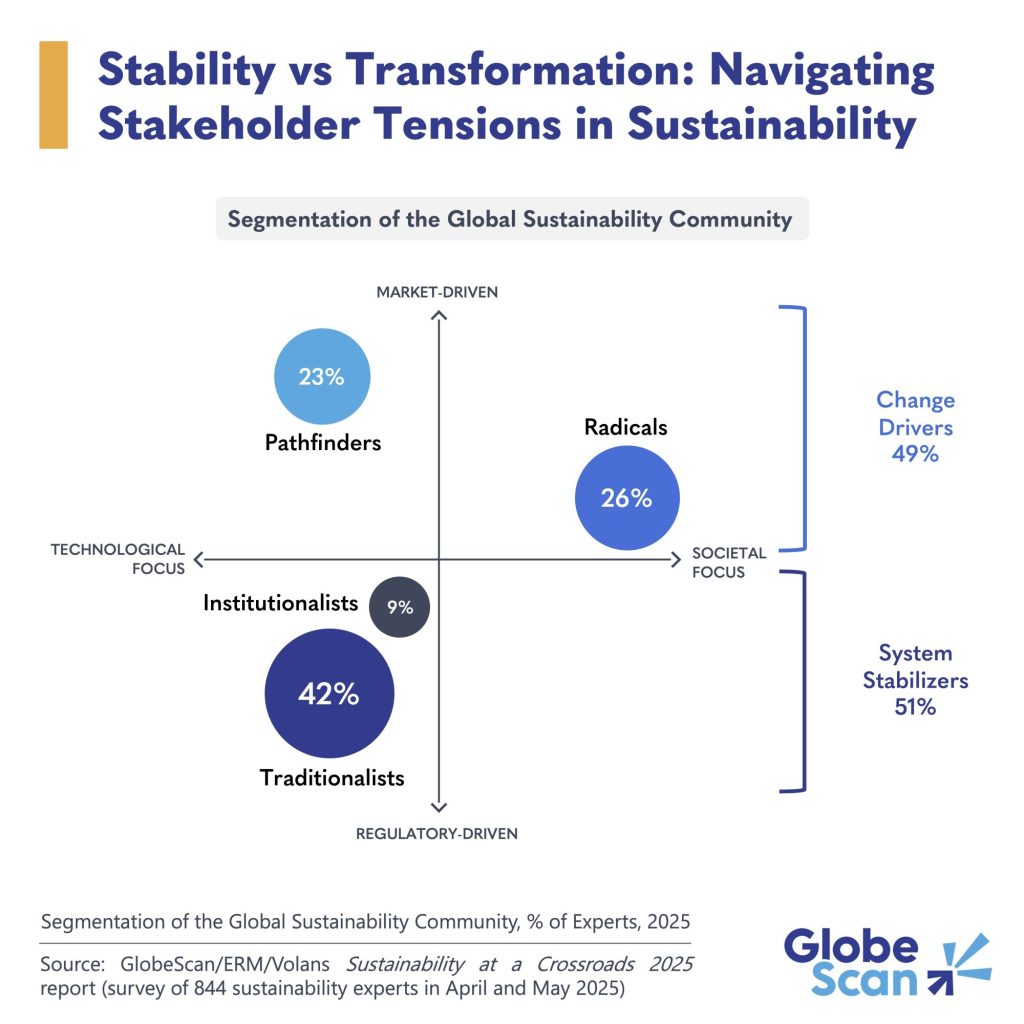
Trellis data partner GlobeScan, in conjunction with ERM and Volans, found sharp regional divides in attitudes toward AI and sustainability. While 60 percent of experts in the Asia-Pacific region and 58 percent in Latin America and the Caribbean believe AI can positively impact sustainability over the next five years, only 48 percent in Africa and the Middle East, 41 percent in Europe and 38 percent in North America share that optimism.

In a similar pattern, sustainability experts in the Asia-Pacific region (80 percent) and Latin America and the Caribbean (72 percent) also express stronger enthusiasm for R&D and technology innovation in general as a lever for sustainability. North American (68 percent) and European experts (68 percent), while also very optimistic, feel more cautious about its potential to drive sustainability progress in the short term. Experts based in Africa and the Middle East are even less enthusiastic (64 percent).

What this means

While AI is increasingly recognized as a transformative enabler for sustainability, these findings suggest that its adoption and perceived value are strongly shaped by regional context and societal attitudes. 

The Asia-Pacific region’s strong optimism may reflect a combination of factors, such as a demonstrated appetite for digital transformation in many fast-growing economies, national strategies focused on AI development (such as those in China, Singapore and South Korea) and a high level of public and private investment in tech-driven solutions. 

The skepticism in North America (followed by Europe) is especially notable given the region’s role as a global hub for AI development. Despite leading in innovation, many North American experts remain wary of AI’s sustainability impact, reflecting concerns around governance, privacy and environmental costs. This underscores the need for leading AI and tech companies to help build a social contract that fosters trust, ensures accountability and aligns AI advances with broader societal expectations.

Based on a survey of 844 sustainability practitioners across 72 countries conducted April-May 2025.

The post Will AI improve sustainability? Experts are divided appeared first on Trellis.

When Absolut sold a special edition vodka in paper bottles in the U.K. in the summer of 2023, the cap was aluminum because it is a difficult piece to reconfigure. Two years later, the spirit maker has successfully tested a paper lid.

The cap was introduced in real-world settings — bars — to make sure neither leaks nor degradation resulted from frequent screwing and unscrewing. Absolut also wanted to confirm that bartenders could grip the bottles easily.

“If it doesn’t work, you will hear about it,” said Eric Nat, director of packaging development at Absolut. “If it does, no one will comment.” That’s not quite true. The participating bartenders voiced approval for how quiet the bottles were when tossed into recycling bins, no small issue in busy establishments. 

Absolut is one of several consumer products companies — along with Carlsberg, Cola-Cola, L’Oreal and Procter & Gamble — that is collaborating with Paboco (the Paper Bottle Company) on paper-based alternatives to glass, aluminum and plastic containers. Paboco, which was created through a joint venture of European packaging companies, Sweden’s Billerud and Austria’s Alpla, is aiming to launch paper bottles at scale by the end of 2025.

Absolut’s interest in paper bottles is spurred by a desire to transition to lower-emissions materials and reduce plastic waste, according to Nat and another company executive involved with the project, Louise Palmstierna, director of future packaging. “We saw fiber technology as promising, because we knew that recycling needed to be part of the equation,” Palmstierna said. 

The concepts that Absolut is currently evaluating will eventually be shared with other brands of parent company, Pernod Ricard, seller of Glenlivet Scotch and Beefeater gin.

Absolut’s packaging team meets regularly with other brands that are experimenting with paper bottles. “We have different takes, but the same ambition,” Nat said. “The faster we can get to market, the faster we can get acceptance.”

Putting a lid on it

Absolut partnered with a Swedish startup, Blue Ocean Closures, to produce its paper cap. Blue Ocean and Paboco had released a paper bottle and cap in October 2024 that weighs less than 16 grams. (They didn’t disclose the capacity.) Both bottle and lid, which include a thin layer of plastic to protect against leaks, were designed to be suitable for paper recycling systems. The plastic weighs about 2 grams.

Wine bottles on a store shelf
The Collective Good wine collection at Target. Credit: Frugalpac

Pros and cons

Shifting entirely to biobased barriers for the bottle and cap is a priority, but it presents unique challenges. “Working with a spirit is tough,” Nat said. 

Here are four reasons why:

  • Alcohol content: Over time, alcohol stains paper — a significant branding consideration.
  • Shelf life: Bigger bottles can sit for a year or more, so packaging that outlasts such a timeframe is critical. For now, Absolut plans to use paper only for smaller quantities. 
  • Carbonation: The relevant brands in Pernod Richard’s portfolio will steer clear of paper bottles until there is more data on how barriers stand up to bubbles.
  • Flavor: Absolut is studying how the new packaging affects the taste of its flavored versions. 

Tradeoffs to consider

Sector interest in paper bottles mirrors a more global one, said David Linich, a PwC partner focused on decarbonization and sustainable operations. In the U.S., paper is recycled at a rate than glass — roughly 60 percent versus 31 percent. That said, the bottles could potentially introduce substances of concern, such as per- and polyfluoroalkyl substances (aka PFAS), in their leak-prevention barriers. “It’s not a clear and easy decision,” Linich said.

Most paper bottles remain available only in limited quantities. One notable exception is Target’s Collective Good wine collection, launched in April 2025. The initial release of four varietals arrived in 256,000 bottles provided by British company Frugalpac, which also makes them for Monterey Wine Co. Frugalpac’s bottles require consumers to separate a plastic pouch from the paper bottle; both are recyclable, in different bins.

Though the unique format of paper bottles offers important shelf differentiation, brands need to be “cognizant of greenwashing claims,” said Brad Kurzynowski, manager of fiber for the Sustainable Packaging Coalition. 

“The bottles are produced from a renewable resource and have an interesting recovery pathway,” Kurzynowski said. “But they are also replacing materials with relatively good recycling rates. There also needs to be consideration of something like lifecycle carbon footprint and how a heavier bottle might perform against something like a lightweight plastic bottle.”

Absolut has said little publicly about its ultimate commercialization plans. Still, it believe that paper bottles “introduce a new way for consumers to think differently,” said Palmstierna. 

“It’s about the right package for the right occasion,” she said. “You might buy a glass bottle for consumption over time, but if you’re hosting a party, paper is perfect,” “We want to change consumer behavior, and we can’t be alone to do that.” 

The post Absolut’s paper bottle now comes with a paper cap, too appeared first on Trellis.

The opinions expressed here by Trellis expert contributors are their own, not those of Trellis.​

Last week, Apple CEO Tim Cook presented President Donald Trump with a gold plaque and a promise to invest $100 billion in the United States. The move was good for his business and shareholders, to be sure. But given that Cook, and Apple, have historically professed to care about more than just business success (like climate change), now would be the perfect time for them to use their newly manufactured goodwill to tackle climate for the sake of business and society.

In its 2024 Environmental Progress Report Apple noted, “We owe it to our global community to rise to the challenge of climate change with all the innovation, empathy and commitment we can muster.”  

The company has made admirable steps toward greening its own operations by investing vast sums and leading the industry on those measures. It also left the U.S. Chamber of Commerce 16 years ago because of that trade group’s opposition to climate policy. 

But noble as these operational efforts are, they’re a category error — like turning the stove off as a way to stop a house fire.

In simple terms, Apple and Cook have followed the playbook of the rest of the giant, massively profitable and therefore highly influential tech industry — which is to do everything they can to appear to lead on climate, without actually doing the things required to solve the problem. Their work, viewed in isolation, seems worthy. But given the reality of the problem and the speed and scale of action required, it’s far from sufficient. 

Instead of driving change at a societal level, Apple has almost exclusively focused on its own impacts, calling for vague action on climate such as corporate or federal emissions targets, but almost never asking for federal regulation. The company has been virtually silent on specific policies, including during the Senate battle over the Inflation Reduction Act (IRA), which eventually passed — and during the recent legislative action to dismantle much of the IRA. 

Even in its much-lauded television ad that spoofed an “audit” by Mother Nature, the company never once mentioned public policy, focusing solely on operations. And yet, Cook hasn’t been entirely silent: He donated a million dollars to Trump’s inauguration, tacitly supporting the administration’s anti-climate-action policies.

Apple could really lead by deploying a different playbook: the one business has always used to drive change in society. That approach uses power, voice, lobbying force, political influence, money, marketing machinery and customers to create the right social, economic and legal incentives to drive desired outcomes. 

A different playbook

This successful corporate influence playbook has been in place since 1972. At that time, big businesses, offended by stringent legislation such as the Clean Air and Water Acts, National Environmental Policy Act, the formation of the Environmental Protection Agency, and the Civil and Voting Rights Acts, created the Business Roundtable specifically to wield political influence against regulation. It worked. Together with the U.S. Chamber of Commerce, they stopped labor law reform, lowered taxes and turned public opinion against government intervention. (Who serves on the board of directors of the Business Roundtable now? Why, Tim Cook does.)

This history leads to a syllogism: business knows it can move the needle on issues it cares about; it says it cares about climate change; therefore it ought to act in ways that will help match the urgency of the crisis. 

But broadly, and specifically in the tech world, that hasn’t happened. Instead, companies have focused on reducing their own carbon footprints through actions such as energy efficiency, clean power purchases, funding for technology innovation and helping suppliers clean up their operations. They market products that help users and customers reduce emissions. But voluntary, small-scale actions can’t provide the speed and scale of market transformation needed. That requires far-sighted policy and regulation to steer the economy rapidly to a zero-carbon future. 

Yet when it comes to political pressure, an analysis by the nonprofit research firm InfluenceMap shows that big tech companies focused just 4 percent of their federal lobbying activities on climate. Like Apple, they rarely support specific policies — instead choosing to heavily market their own operational greening, leaving many with the (misleading) impression that what we need is simply for more companies to follow their lead. These actions give the government a pass; after all, if business is solving the problem, why bother with regulation?

Breaking a taboo

If Cook were to publish an op-ed in The Wall Street Journal pointing out that climate has become a business risk and that federal regulation (not just incentive-based legislation) is essential, it would change the corporate game. 

Because Apple is so admired, the move would galvanize other business leaders and silence elected officials tipping back into climate denial. Cook could single-handedly break the taboo against business advocating for regulation. Next, he could charge his company with reaching out to customers, asking for their help to pressure elected officials. (Most consumers care about climate change.) 

Cook could also:

  • Make public Apple’s climate lobbying (or lack thereof) now occurring behind closed doors and commit to allocating substantial lobbying dollars specifically to climate. 
  • Speak up to defend key EPA regulations under attack. (Ironically, while Cook met the President at the White House, Trump’s EPA was actively dismantling the foundation of American climate law, a rule called “the endangerment finding.”) At the state level, Apple could push for stronger climate policies and use its freshly announced investments as leverage. 
  • Use the company’s considerable global influence in Europe, Asia, and elsewhere it operates to help enact stronger climate regulations.

The Trump administration has flipped the calendar back more than 20 years, to an era when people didn’t even believe the planet was warming. With climate deniers running all federal divisions, and agencies either gutted or weaponized in support of fossil fuel expansion, we have limited tools in the climate fight. In the absence of government, corporations are one of the most powerful agents of change. And one of the most effective tools they have is their influence.

The ability to solve — or significantly move the needle on — a problem that condemns hundreds of millions of people to suffering carries with it the moral obligation to act. As one of the most successful and powerful corporations in the world, Apple has the leverage to change the state of play on climate in the U.S. At this particular moment in history, it could do even more by taking a stand for democracy itself, which would solve multiple problems at once — including ensuring the stable governance needed for successful business. How could it not? 

The post It’s time for Apple to wield its influence on climate policy appeared first on Trellis.

Vast government-managed forest conservation programs are launching in the tropics, to limit deforestation and reduce corporate carbon emissions.

Unlike project-based programs, which impact limited parcels of land and are typically managed by private developers or NGOs, these “jurisdictional” programs, as they are known, cover emissions reductions across an entire country or state with standardized baselines, monitoring and safeguards.

By offering government-validated credits at such a massive scale, these programs aim to minimize such issues as leakage (when deforestation migrates) and double counting (when more than one entity uses the same credit to make a reduction claim) by providing a way to consider all land-use changes within the jurisdiction.

Implementation, however, has met with some skepticism. In Brazil, for instance, a public prosecutor is challenging one $180 million forest conservation program in the state of Pará. 

While the jurisdictional approach is relatively untested, proponents argue that outsized interventions like these are needed to combat today’s alarming scourge of deforestation, which releases large amounts of stored carbon dioxide into the atmosphere.

Inevitably, evaluating jurisdictional programs and the credits they offer will be a necessary art for business leaders engaging with voluntary carbon markets. 

“There’s a lot that can go wrong, especially when you’re working deep in forests with Indigenous groups and sometimes in contested territories,” said Barbara Haya, director of the Berkeley Carbon Trading Project. “You really need to know the program well before you can in good conscience give donations or buy these credits.”

What are jurisdictional forest programs?

Forest conservation is the largest source of carbon credits on the voluntary carbon market, accounting for about 25 percent of the inventory. But the current network of individual, disconnected projects has produced mixed results.

“Despite more than $3 billion in aid for REDD and close to a half billion carbon credits awarded over the last 20 years … deforestation is still continuing at an alarming rate,” found a study by the Berkeley Carbon Trading Project. REDD stands for Reducing Emissions from Deforestation and forest Degradation. The framework helps countries value projects to address deforestation.

In expanding the project model to cover so much more territory, jurisdictional programs bring to bear more accurate measurements, more coordinated enforcement efforts and much farther-reaching solutions. Conventional projects average around 200,000 hectares. Jurisdictional programs often require a minimum area of 2.5 million hectares for certification; that’s about the size of Massachusetts.

Governments in Ecuador, Costa Rica, Ghana and Brazil have all set up jurisdictional programs. Generated carbon credits are owned by the state and sold directly to buyers through purchase agreements, or through other entities as determined by the government.

While many critics argue that jurisdictional programs don’t adequately compensate for corporate carbon emissions, most acknowledge that the system is an improvement over the fragmented project model.

Problems in Pará

The jurisdictional program being created by the Brazilian state of Pará covers an area about three times the size of California. The state has reached a deal with the LEAF Coalition, which represents companies like Amazon, Bayer and the Walmart Foundation, to purchase 12 million carbon credits at $15 each. 

The challenge filed by Brazil’s public prosecutor cites an illegal forward sale of credits and inadequate consultation with Indigenous groups, among other objections.

People working with the program counter that the process has only just begun, and no credits have been sold. Pará’s community consultation process, one of the largest in Brazil’s history, will help determine the benefit-sharing agreement. Project development is being allowed to continue while the lawsuit unfolds.

“I can’t overstate how challenging it is to involve so many people in such a huge place as Pará,” said José Octavio Passos, Brazilian Amazon director of The Nature Conservancy. “Sometimes, it takes three days by boat to get to people. It’s a very expensive, complex process that involves multiple communities that speak different languages.”

Due diligence essentials 

Here are some tips for navigating the new world of jurisdictional forest programs and the carbon credits market.

1. Check the certification

Accredited certification standards include ART TREES, Verra JNR and FCPF. Each attaches specific requirements to program approval.

ART TREES is the most widely used standard for jurisdictional programs. To be certified, programs must do annual monitoring with internal quality checks and submit monitoring reports for three years of the five-year certification period.

If a program is certified by an organization you don’t recognize, there are two things to look for: “One is whether the methodology has a CCP label by the Integrity Council for the Voluntary Carbon Market (ICVCM),” said Gabriel Labbate, the UNEP’s head of the climate mitigation unit and the UN-REDD program. “I would also check with CORSIA, the carbon market for international aviation that undertakes an assessment of methodologies.”

Approval by these bodies is a strong initial indicator of a high-integrity program.

2. Review the independent audit

Before any credits can be issued, independent audits must verify that a program is adhering to its certification, its baseline measurements are accurate and emissions reductions are, in fact, occurring. Certification bodies also require adequate community consultations, which auditors will verify.

“The system will go through an audit process before it can issue credits,” said Octavio Passos. “In the case of Pará, an auditor will check all the specifications, particularly the safeguards and consultation process.” 

3. Understand local context

Different regions have different deforestation drivers, so the program must be tailored to address conditions on the ground in collaboration with local stakeholders.

Implemented properly, mega-scale programs can be a powerful tool that drives systems change not just for forest protection, but for human rights, as they bring added scrutiny to coverage areas.

“Jurisdictional REDD programs are government policy, really,” said Jamey Mulligan, head of carbon neutralization at Amazon. “It’s legal protection for the forest and enforcement of those protections. It’s better agricultural sector planning. It’s recognition of Indigenous rights. It’s all of those things.”

Understanding the local context is also important to avoid programs that enable or exacerbate social harms.

“If you have a country in which you see widespread human rights abuses in rural areas, that’s something I would look at,” said Labbate. “In these times, though, it would be very unlikely that Verra or ART TREES would allow any abuse to go forward.”

4. Take account of community involvement and benefit sharing

Jurisdictional programs must also determine what percentage of revenues goes to local communities and what percentage to the government, to manage the system as a whole.

For example, Acre, another state in Brazil with a jurisdictional program, recently announced that 72 percent of proceeds will go to Indigenous communities and other local groups.

Whatever the split, though, inclusion and deference to community opinion is key. 

“A high-quality program needs to ensure that inclusive participation mechanisms are in place from the earliest stages of design and that community governance structures are involved in overall decision-making,” said Josefina Braña Varela, vice president and deputy lead of forests at the World Wildlife Fund.

5. Know your risk vs. reward appetite

What happens in Pará will help determine the parameters and practices of future state- and country-wide projects. That said, some experts believe that confrontation and conflict, while inadvisable from a reputational risk standpoint, will be necessary parts of the process.

“You have to have tough conversations,” said Mulligan. “We can’t solve global deforestation without governments getting together with Indigenous peoples and local communities to work through the challenges: How are we going to work together? How are we going to share resources? What are our respective roles? These are the conversations that need to be had.”

The post Mega-scale forest carbon programs have major promise — and big challenges appeared first on Trellis.

Old computers, mobile phones, data center servers and other electronics make up the world’s fastest growing waste stream —62 billion kilograms in 2022. Less than one-quarter of it is collected and processed into some sort of second life, according to the 2024 Global E-Waste Monitor. 

A small, four-year-old U.K. consulting firm has created a new type of carbon credit it hopes will change that.

Written by Bloom ESG, the methodology assigns greenhouse gas emissions reduction values to processes such as mining discarded electronics for rare earth minerals, disassembling them for their component parts or sprucing them up to sell as refurbished gear. 

Dynamic Lifecycle Innovations, a technology and electronics recycler with facilities in Wisconsin and Tennessee, bought the first 300,000 verified carbon credits issued under the new scheme. Those credits represent emissions avoided as a result of Dynamic Lifecycle’s operations in 2023.

Bloom ESG’s methodology uses the ISO 14064 standard for greenhouse gas accounting from the International Organization for Standardization. The credits are considered insets, rather than offsets, as they measure an activity’s impact within a company’s supply chain or operations, said Sebastian Foot, co-founder of Bloom ESG.

”If we can put a focus on increasing the reuse of electronics, there is a credible benefit we can receive as a result,” Foot said.

More buyers sought

Dynamic Lifecycle can retire the credits for its own ESG-related accounting and disclosures, or trade the credits to equipment manufacturers or corporations to use for their own claims.

“Everything tells us that this should work, and the market should receive it well,” said Curt Greeno, president of Dynamic Lifecycle.

Bloom ESG is courting other recyclers and IT asset managers to create a trading registry for the credits by the end of 2025. Participating companies will pay an annual licensing cost plus fees related to credit issuance and retirement, Foot said.

Companies investing in strategies that give a second life to computers usually do so to reduce costs and create new value for their business, said Michael Leitl, executive director of circular economy strategy firm Indeed Innovation. Two examples are Deutsche Telekom and Cisco, which offer financing methods for their products that encourage customers to return them as they age. “By controlling the secondhand market, they can keep the quality high and guarantee that their brand is not damaged,” he said. 

The new registry will help to communicate the value of these activities, but Leitl cautioned companies to be careful about how they use the credits to make their claims. “It’s really a discussion between the sustainability department and the general business manager,” he said. 

The post New carbon credits put focus on electronics recycling and reuse appeared first on Trellis.

The opinions expressed here by Trellis expert contributors are their own, not those of Trellis.​

Ask anyone who’s been a CEO, CFO or any other variety of C-suite executive and they’ll tell you the roles today are very different from what they were 20 years ago. Different challenges demand different skills, experiences and aptitudes, and the role of chief sustainability officer is no exception. For one, in most companies the role didn’t exist 20 years ago, and in the past two decades it’s tumbled, twisted and catapulted to a seat at the table.

What started as a nice-to-have, feel-good role for many companies has now, in some cases, become a strategic pillar of their core business endeavors. And the position continues to evolve, shaped by mounting environmental pressures, shifting stakeholder expectations and an increasingly complex political and regulatory landscape.

Acting like chameleons

CSOs, at their core, are masters of resilience. In today’s geopolitical landscape defined by increasing volatility and uncertainty, they adapt to whatever the moment demands like chameleons. When the spotlight calls, they become compelling storytellers, championing their company’s vision. When discretion is needed, they work behind the scenes, quietly building coalitions and forging consensus.

Dave Stangis, a veteran CSO, offered a particularly insightful perspective in Weinreb Group’s 2025 CSO Report: “CSO leadership is like Aikido: It takes the right mix of art and science. Ten years ago, the CSO needed a 50/50 split to establish the position. These days, the demands of the role have shifted to more like 75 percent art and 25 percent science.”

John Davies, president of the Trellis Network, often speaks of the CSO role as chief translation officer, given different functions speak different “languages”: financial executives most often speak in terms of risk mitigation and return on investment, while operations leaders focus on efficiency gains and process improvements and human resources professionals consider talent attraction and retention.

The artful CSO learns to speak all these languages, crafting arguments that resonate with each audience while maintaining consistency in the underlying message. This requires not just analytical skills but emotional intelligence, cultural sensitivity and a deep understanding of organizational dynamics.

The most effective CSOs become organizational anthropologists, studying the formal and informal power structures within their companies to identify the most effective pathways for driving change. But there are easy tricks to get started on this path. For example, Microsoft’s Jim Hanna asks leaders two questions: “What keeps you up at night and what are you incentivized on?”

According to Weinreb Group’s 2025 CSO Report, CSO’s top key attributes are: corporate chameleon aligning with a diverse set of internal and external stakeholders; operating at both the big-picture and general levels; and systems thinking.

Maintaining core identity

The chameleon analogy is particularly powerful because it highlights a crucial distinction: While a chameleon may change its color to suit the environment, it doesn’t change its fundamental nature. Similarly, the most effective CSOs and their teams maintain a consistent core identity and set of values while adapting their approach to different contexts and challenges. This balance between adaptability and authenticity is one of the most difficult aspects of sustainability leadership to master.

One critical step in this effort is to know thyself and which of the six corporate sustainability archetypes your company fits: Box checker; Risk reduction driven; Immediate returns driven; Brand and reputation driven; Purpose and impact driven or innovation driven.

Many CSOs went into their roles to drive societal impact and therefore skew towards purpose and impact as their default mode. This worked well when these programs were philanthropic and additive, but as they have become core to adding business value, this orientation can derail some. The CSO today has to be able to hold conflicting ideas in their head at the same time. A type of mental origami that is difficult to perfect.

Consider a story we once heard: Yvon Chouinard of Patagonia was challenged by his sales team on how they were to meet their ambitious sales targets when the company was promoting the limits of growth and anti-consumerism in its campaigns. He told them that holding that tension and finding ways to manage it was the job and walked away — leaving the team to find a way to achieve both. They did. Some version of this challenge is the one many CSOs face as ESG efforts become more business-integrated and aligned.

CSOs who understand the complexity of the moment, varying points of view, experiences and incentives, and mold themselves to their reality while staying true to their fundamental purpose will be best suited to deliver on the conviction that business can and must be a force for positive change in the world and do well in the process.

The post Corporate chameleons: The evolution of the CSO appeared first on Trellis.

The attorneys general of 23 states want details about the Science Based Targets initiative’s new net-zero guidance for financial institutions, suggesting that it violates antitrust laws by attempting to “squeeze important American industries into eliminating carbon dioxide production by some future date.”  

The request, coordinated by Iowa Attorney General Brenna Bird, is outlined in an Aug. 8 letter to SBTi CEO David Kennedy. “Net-zero programs are unrealistic and harm both American agriculture and industry,” the attorneys general write. “Making net zero a goal actively harms Americans, creates risks for energy independence and increases the cost of food.” 

The letter doesn’t have the same legal teeth as the subpoenas sent to SBTi and CDP in late July by Florida Attorney General James Uthmeier, but it is the next step in a coordinated anti-ESG campaign against financial institutions that have spoken publicly about cutting back investments in fossil fuels companies. 

“Interestingly, the letter does not invoke the Iowa AG’s statutory subpoena authority and is instead presented as an informal request from each of the state AGs for certain documents and information,” said Roy Prather, principal at law firm Beveridge & Diamond. “Failing or refusing to provide the information does not carry the same risk of penalties that is associated with the Florida AG’s subpoenas, but it is certainly an escalation with respect to attention and scope.”

States represented by the letter include Alabama, Alaska, Arkansas, Florida, Georgia, Idaho, Indiana, Iowa, Kansas, Louisiana, Mississippi, Missouri, Montana, Nebraska, North Dakota, Oklahoma, South Carolina, South Dakota, Tennessee, Texas, Virginia, West Virginia and Wyoming.

The attorneys general have demanded a response before Sept. 8. SBTi declined to comment.

Financial institutions under pressure

The attacks on banks, insurers and other financial institutions with climate goals started about two years ago but ramped up once President Donald Trump took office in January. At least 18 states have enacted laws that make it possible to sue banks and others over their environmental, social and governance strategies.   

Many banks and asset managers, hoping to placate particularly aggressive states, have already exited high-profile industry net-zero campaigns that started in the 2020 timeframe — such as the Net Zero Asset Managers initiative and the Net Zero Insurance Alliance, both now defunct. 

The trigger for this latest investigation was SBTi’s July publication of the net-zero standard for financial companies. The framework was tested by about 30 companies. SBTi said 135 have committed to following it, and the AGs want those names. SBTi’s commitment dashboard shows that the vast majority of those committed to using the net-zero framework come from outside the U.S.

“SBTi and the financial institutions that commit to its standards risk violating federal and state antitrust laws as well as state consumer protection laws,” the letter said. “Some economic arrangements are illegal because they are unfair or unreasonably harmful to competition; the ‘good intentions’ behind them are irrelevant.”

While anti-ESG investigations have muzzled companies and prompted backpedaling by many of the largest financial institutions, so far, only one has turned into an actual antitrust complaint. 

That case, led by Texas, accuses BlackRock, State Street and Vanguard, as members of Net Zero Asset Managers Initiative and the Climate Action 100+, of conspiring to force coal companies to reduce production. A federal judge largely denied a motion for dismissal Aug. 1, which means the case is still very much alive.

Editor’s note: This story was updated to add details about the geographic origin of most companies currently committed to SBTi’s net-zero framework for the financial industry.

The post State AGs demand information about SBTi’s new net-zero guidelines for financial firms appeared first on Trellis.

Ingka Group is backing Shanghai-based plastics recycler Re-mall as part of a planned $1.16 billion investment in companies that can help IKEA’s largest retailer meet its goals of repurposing and reusing more materials in the products it sells.

The move is Ingka’s first in support of a circular economy infrastructure company in China, one of the world’s largest markets for plastic waste. 

Re-mall, founded in 2015, specializes in producing high-quality post-consumer recycled propylene from food packaging, which is notoriously difficult to process because of the organic residue left on it. Its production facility is in Jiangxi province, a hub for plastic waste streams from Shanghai and Guangzhou.

The plastic pellets and materials Re-mall creates can be used in many different products, including toys, tableware, cosmetics packaging and woven textiles. The company is building closed-loop relationships with its biggest customers — collecting materials from those brands before feeding recycled materials back into their supply chains. 

“Re-mall’s strong supplier network and partnerships with leading Chinese food delivery service providers are already allowing it to create impact at scale in the local recycling market,” said Lukas Visser, head of circular economy investments at Ingka Group.

Ingka’s backing — the amount of which is undisclosed — is characterized as growth capital that will expand its commercial capacity.

Orchid plant in front a a window
Re-mall’s production facility in Jiangxi province has access to plastic waste streams from Shanghai and Guangzhou.
Source: Ingka Group

The bigger picture

Ingka’s climate transition strategy includes cutting the carbon footprint of product end of use, which accounted for 1.6 million metric tons of greenhouse gas emissions in 2024 — 7 percent of the total. 

The absolute amount is down 15 percent from 2016, the year Ingka uses as the baseline for its goal of halving emissions by 2030. Ingka also intends to become “fully circular” by the end of the decade.  

Ingka Investments announced its $1.16 billion (1 billion euros) investment plan in January. Re-mall is the fourth publicly disclosed company in its portfolio. The others, all European, are:

  • RetourMatras, a mattress recycler that processed more than 1 million mattresses in four facilities in 2024, avoiding an estimated 90,000 tons of carbon dioxide equivalent emissions (tCO2e). RetourMatras sells recycled material to customers such as IKEA to use in new production. 
  • Morssinkhof Rymoplast, which handles high-density polyethylene, low-density polyethylene, polyethylene terephthalate and polypropylene plastics. Ingka acquired a 17 percent stake, helping to double Morssinkhof’s capacity.
  • Next Generation Group, which provides equipment to the plastics recycling industry. 

In its latest environmental progress report, Ingka estimated that these ventures have so far recycled approximately 1.9 million metric tons of materials, avoiding 5 million metric tCO2e.

The post IKEA’s biggest retailer funds Chinese food packaging recycler appeared first on Trellis.