More companies retired carbon credits in the five months since the U.S. presidential election than during the same period a year ago. This indicates that carbon credit buyers are continuing to work toward their long-term climate targets, executing on strategies that stretch beyond any presidential term, according to a report published today by Patch, a carbon credit purchasing platform. 

While total active buyers grew, carbon credit retirement volume declined compared to the same five-month period from the end of 2023 through the first quarter of 2024. That shift may be due to recent guidance from standards setters, rather than political shifts, according to the report. 

“There is no credible path to net zero without carbon removal,” said Brennan Spellacy, Patch CEO, in an interview. As a result, “we’re beginning to see folks … building up their carbon removal inventory or capacity.” That action today will set carbon buyers up to accomplish their climate targets in 2030 and beyond.

“Ramping up [carbon removal purchasing] incrementally is realistic and pragmatic,” said Louis Mark, senior manager of sustainable operations and ESG at Autodesk, which has set a 10-year, science-aligned decarbonization target to reduce its emissions and has been purchasing carbon removal and avoidance credits since 2021.

Source: Patch

Carbon market activity signals broader climate strategy

The voluntary carbon market is a “canary in the coal mine” for corporate climate action, according to the new analysis from Patch. Since credits are transferred digitally, buyers can stop purchasing at any moment, making market demand highly responsive to changes in buyer strategy. 

The fact that companies are carrying on with their carbon credit strategies signals that they’re not only committed to their climate targets, but acting on time scales that stretch beyond presidential terms. “Enterprises think in 5- or 10-year operating plans … that’s longer than any administration,” according to Spellacy. 

The Patch report isn’t the first to show evidence that carbon market activity is a hallmark of companies investing more broadly in their climate strategies. Material users of carbon credits are more than twice as likely as companies not active in the voluntary carbon market to achieve other signals of credibility in their climate targets, according to a report published last fall by MSCI’s carbon markets research team. 

Drivers of the decrease

Several factors are likely driving the recent dip in credit retirements. 

One factor may be an overall shift away from offsetting and carbon neutral claims, according to the report.

Over the past 18 months, new guidance documents from well-known standard setting bodies, including the Science Based Targets initiative (SBTi), Voluntary Carbon Market Integrity Initiative (VCMI) and The Climate Label, have advised companies to retire carbon credits as contributions to global climate action, but not to make claims about offsetting or neutralizing ongoing greenhouse gas emissions. Companies following these guidelines can focus more on opportunities for impact and less on meeting volume thresholds for their carbon credit purchases. 

Another explanation of the dip is that companies active in the voluntary carbon market are gradually ramping up their carbon credit purchasing and retirements in preparation of achieving 2030 targets, rather than having to put on muscle all at once in the future. 

The data also shows increasing interest in carbon offtake agreements, another sign that companies active in the voluntary carbon market today are thinking about securing credit supply for the future. 
Source: Patch

Buyers are looking for removals

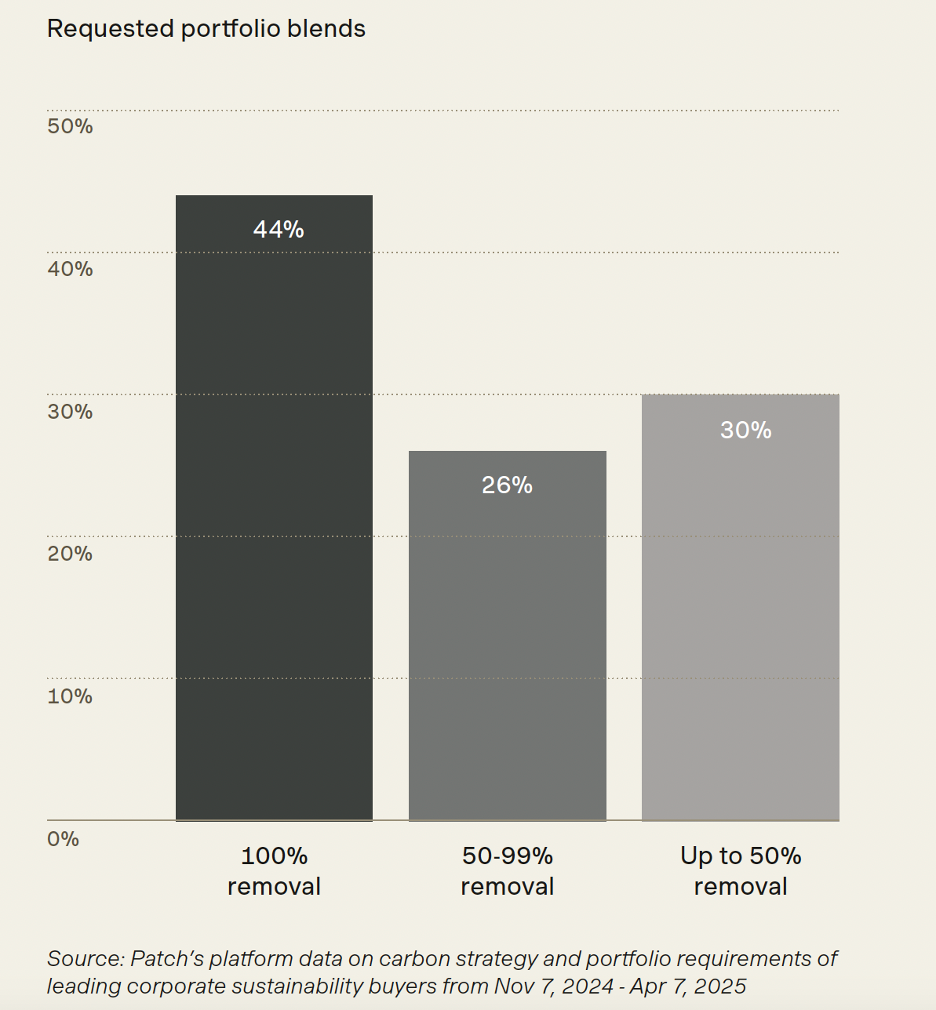
Carbon credits from projects that remove carbon from the atmosphere are very popular. Nearly half of post-election purchase requests seen by Patch have been for removals-only portfolios. Of the 20 most requested project types during that period, 14 were removals.

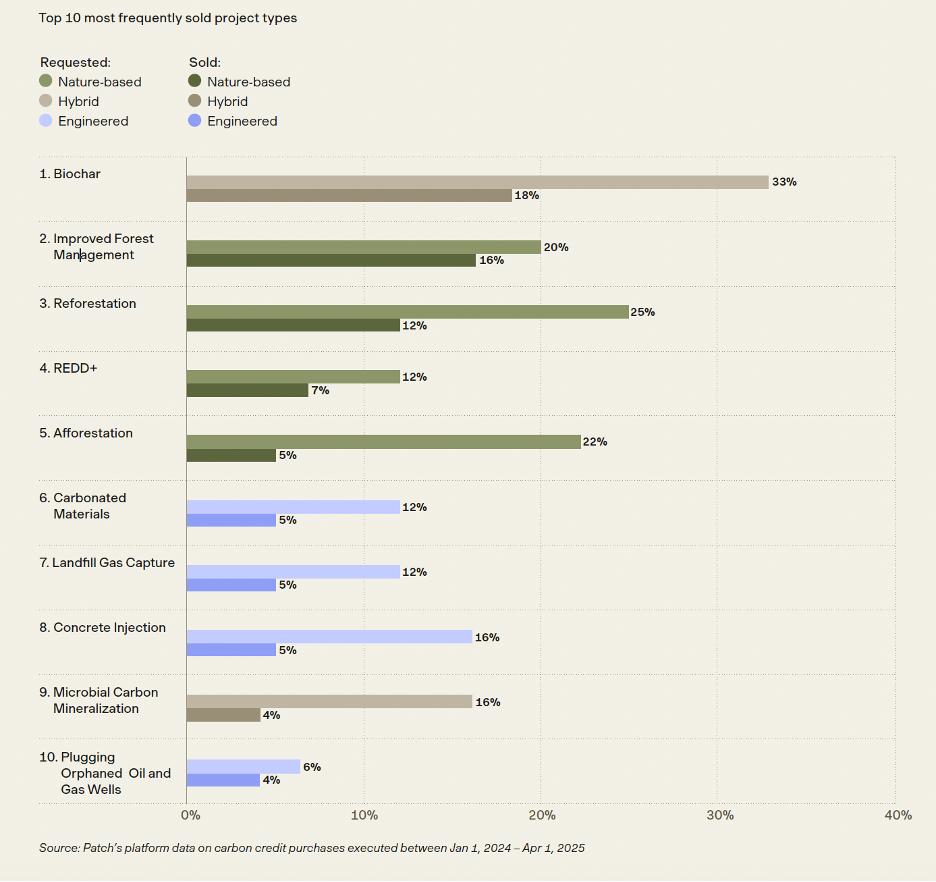
Biochar carbon removal has been the most requested carbon project type in Patch portfolios, followed by reforestation, afforestation and improved forest management — all projects based on nature’s ability to pull carbon out of the atmosphere.
Source: Patch

A hidden supply crunch

Buyers are unable to consistently purchase enough carbon removal credits from the specific project types they’re requesting. For example, though one in four buyers ask for some reforestation credits, it makes up just 12 percent of projects sold because not enough supply meets buyer’s ratings and pricing requirements. 

Buyers are turning to third party verification

To prioritize project quality, buyers are turning to third party ratings to make the search more straightforward. 

Some 80 percent of companies were looking for projects with a BBB+ rating from BeZero, or Tier 2 and above from Sylvera. 

Nearly 40 percent of buyers active on the Patch platform in the past five months are also looking for credits from projects using methodologies that have received a Core Carbon Principles label from the Integrity Council for the Voluntary Carbon Market, an independent governance body that has established public standards for quality in carbon project methodologies.

Climate progress over policy chaos

The continued growth in companies funding global climate action via carbon markets is an encouraging sign that corporate climate strategies are aligning more closely with the goal of limiting disastrous warming than with policies from Washington. 

“There’s a sense that if there’s someone else doing it, you can do it too,” said Mark, of Autodesk. “That is a catalyst that should not be forgotten about this decade, and it’s going to be even more essential as we move forward to 2050.” 

[Connect with more than 3,500 professionals decarbonizing and future-proofing their organizations and supply chains through climate technologies at VERGE, Oct. 28-30, San Jose.]

The post Carbon buyers carry on despite political shifts appeared first on Trellis.
When the United States Agency for International Development (USAID) was dismantled earlier this year, there were two focal points of media coverage. First, there were the humanitarian costs. Second, the headlines analyzed geopolitical impacts for the U.S. in losing its primary tool in delivering one of three legs of national security (defense, diplomacy and development). 

But underneath these predominant losses is yet another: global sustainability efforts. Beyond humanitarian aid and democracy building, USAID was also the leading provider of foreign aid across the spectrum of sustainable development, from agriculture to energy to waste management. 

USAID’s collapse is not only the loss of a leading mission-aligned partner for many companies. It’s also a harbinger of a larger trend in shrinking foreign assistance that’s important for corporate sustainability professionals whose scope includes global supply chains and emerging markets. 

The impact of USAID’s loss on corporate sustainability

USAID played a pioneering role in private sector engagement among government donor agencies. Over the past two decades, it evolved its approach from ad hoc collaborations to a more strategic and systemic model of co-creating and co-funding development solutions with companies of all sizes. Between 2000 and 2020, it implemented over 1,600 private sector partnerships, called Global Development Alliances, involving Fortune 500 companies, local businesses and industry associations — pairing private-sector expertise, assets and innovations with its funding, local networks and knowledge to build resilient supply chains and inclusive markets. 

Many of the world’s largest companies understood the value of partnering with USAID. For example, PepsiCo and USAID had partnered on a $20 million project to empower female farmers in PepsiCo’s supply chains across Asia, Latin America and the Middle East. Unilever, EY and USAID, meanwhile, had recently announced a $21 million project to address plastic waste across Asia. 

USAID had increasingly been investing in these types of private-public partnerships over the last decade. While the latest data on the size of their investments is now difficult to find, a reasonable estimate is that it invested around $200 million per year through private-public partnership mechanisms. 

But USAID was more than a check-writer and project partner. Its $40 billion annual budget helped develop the foundation of stronger operating environments for business activities across Africa, Latin America and Asia that allowed corporate sustainability teams to launch impactful innovations and initiatives, regardless of whether they were formally partnering with the agency. 

The loss of USAID’s direct funding and co-investment will make the business case for sustainable supply chain and market expansion activities harder to articulate. It’s easier to make the case for a $10 million investment over five years when USAID matched that funding, than to make the case for a $20 million corporate investment to achieve the same outcomes. 

While USAID is disappearing, it’s important to note that foreign aid still has a future in America and is being re-tooled within the Department of State with three pillars—strategic humanitarian assistance, development finance for trade and politically oriented programming. It’s unclear exactly how long it will take before the new policy and initiatives are launched. 

A changing foreign aid landscape 

In addition to 83 percent of USAID programs being cut over the first half of 2025, global official development assistance (ODA) spending declined 7.1 percent in 2024, with more foreign aid cuts being announced across Europe. Aid from Germany (the second largest donor) is expected to drop 9 percent this year and France is cutting its budget 11 percent for 2025. The U.K. (the fourth largest donor) will almost halve its ODA budget, moving $7.6 billion into defense spending. 

Overall, foreign aid is becoming more transactional, politicized and vulnerable to the ideological mood swings of governments. Amid this retrenchment and remaking of “aid,” many European governments are pivoting toward sustainable investment projects rather than grants as the focus of their foreign assistance because they seek to get more direct economic returns for their aid contributions. 

For companies, especially those headquartered in Europe, this highlights the growing opportunity for innovative financing partnerships, such as blended finance mechanisms that allow companies to partner with public capital to de-risk their sustainability investments in emerging markets.

How companies can adapt and respond

In a moment when our interconnected global challenges call for increasing levels of cooperation, government responses are growing more insular and unilateral. The growing emphasis among European donors on investment-oriented models offers a bright spot through blended finance approaches. These vehicles — structured to share risk and rewards across a range of stakeholders — enable businesses to scale successful programs as traditional grant pools dry up.

But blended finance is only part of the solution. Sustainability teams can also explore pre-competitive and complementary collaborations, particularly in geographies where shared challenges require collective solutions. One example of this approach is the Rimba Collective, in which P&G, Nestle, PepsiCo and Unilever are pooling their funding to deliver conservation projects in the landscapes of Southeast Asia that supply palm oil for their businesses. 

The next frontier of private-private collaboration will be even more focused on systems change at the local level. We’re seeing an increasing interest from companies exploring partnerships across industries within landscapes and communities of mutual interest. For example, food companies that source various crops (corn, wheat and dairy) from the same supply shed are exploring how to work with technology and infrastructure providers to increase productivity and efficiency along the first miles of global supply chains. By combining business cases focused on supply and demand, companies can de-risk their individual investments and create conditions for success that also improve social and environmental outcomes.

Ultimately, the decreasing availability of foreign aid, especially grant-based mechanisms, highlights the urgent need for sustainability teams to strengthen their ability to calculate and articulate the business case for corporate investments in their sustainable supply chain and market activities. Internally, company executives have to understand the future value of potential investments to provide the required budgets. Externally, the business case is a crucial component of articulating the investment thesis to potential public and private partners. 

By shifting strategies and embracing new partnership models, companies can maintain global sustainability momentum despite the changes happening in government-backed support.

[Sustainability work is hard. Ready for Trellis Network to help? Learn more about our peer network.]

The post Beyond USAID: How to secure funding for sustainability amid a $200 million annual gap appeared first on Trellis.

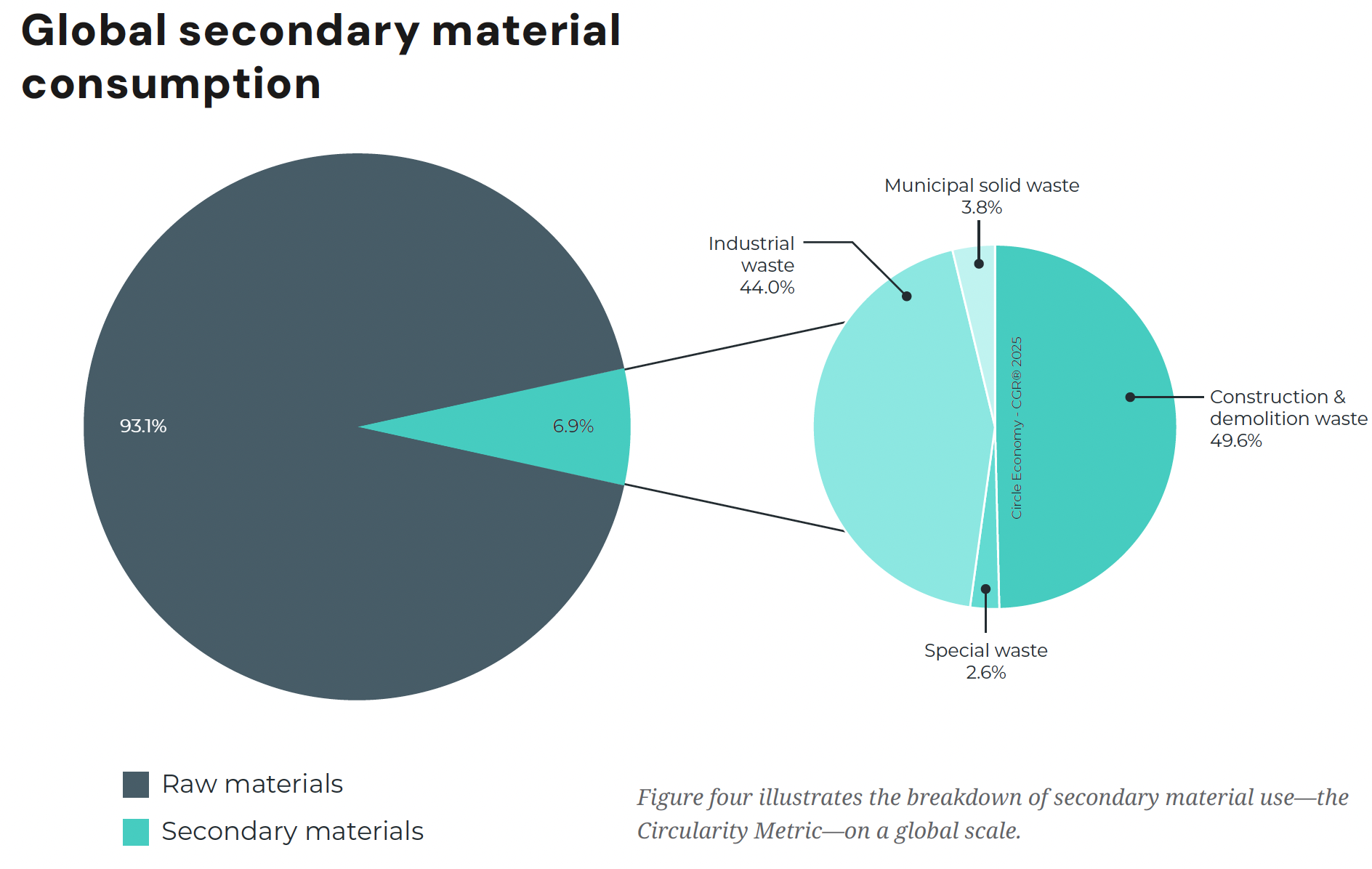
Global economies are becoming less circular despite the increased use of recycled and other non-virgin materials, according to the 2025 Circularity Gap Report. It found a worldwide rate of 6.9 percent circularity, a drop from two 7.2 percent years earlier.

The Amsterdam consultancy Circular Economy and London-based Deloitte Global released the report May 13 at the World Circular Economy Forum in São Paulo.

The circularity metric represents the proportion of materials flowing through the global economy that are secondary — i.e., reused, resold or repaired — rather than new.

More materials recovered from waste are substituting for virgin sources in products, the report authors found. But mining, logging, farming and other activities are seizing ever more raw materials from nature.

Turning the tide

In the past half century, the total number of resources people extract from nature has tripled. By 2060, the report projected, that will jump by another 60 percent.

Even if that didn’t change, however, the report’s authors believe that the global circularity metric could soar to 25 percent if everything that could be recycled was, in fact, recycled.

Of course, that’s no simple tweak.

“By rethinking product design, investing in new business models and developing new capabilities, the private sector can accelerate the transition towards a circular economy,” said Ingka Group IKEA’s Global Circular Strategy Leader Hege Saebjørnsen, in a report statement.

Credit: 2025 Circularity Gap Report

The role for companies

The report authors urged businesses to adopt circularity frameworks, transition to circular economy models and collaborate across their value chains to innovate and optimize resources. They also voiced a call to action for organizations to:

  • Stop virgin materials use from outpacing secondary materials use by promoting circular design ideas, making products last longer and establishing recycled materials as the standard.
  • Slow harms to species, soil, air and water caused by the rising consumption of biomass by practicing regeneration while harvesting natural resources for food and fuel, returning nutrients to nature and employing low-emissions practices.
  • Maximize the nearly two-fifths of global materials annually stored as”stock” in buildings, infrastructure and equipment by whenever possible reusing, refurbishing and renovating instead of building new, and recovering more materials during building and demolition.
  • Curb the growing use of fossil fuels, which feed 78 percent of climate emissions, through the use of alternative renewable energy sources and enhanced technologies that reduce the need for virgin materials.
  • Counter the more than one-fifth of recyclable materials that are wasted by managing materials wisely across supply chains, designing goods for circularity and supporting waste management infrastructure.

A protocol on the horizon

The Science-Based Targets initiative’s net zero standards have become de rigueur for corporate sustainability work. However, global standards for materials circularity have been lacking. That may change, the authors noted, as the Global Circularity Protocol emerges.

“Circular solutions are the only way for businesses to meet both their growth ambitions and global sustainability targets,” said Quentin Drewell, senior director of circular products and materials at the World Business Council for Sustainable Development. The Geneva organization has been instrumental in developing the circularity protocol, which is likely to become integrated into future corporate sustainability reports.

The report aligns with the protocol, Drewell added, and it “plays a crucial role in guiding business leaders toward measurable and transformative actions to ensure businesses can generate long-term value and build up resilience.”

The post The world is becoming less circular. Here’s how to reverse that appeared first on Trellis.

As long-held global economic norms and reliable trade partnerships are disrupted by the Trump administration’s ad hoc tariff policies, the need for a domestic supply chain that can recycle and refurbish critical materials has become increasingly necessary for market stability.

Enter Extended Producer Responsibility (EPR) legislation. These state-level laws require manufacturers to develop products that can be recycled and repurposed back into the supply chain.

Many states already have such laws in force, while others are in the process of enacting them. Below is a roundup of states with full or limited EPR laws or pending legislation.

States with active EPR laws

Maine

Oregon

  • Law: Plastic Pollution and Recycling Modernization Act (SB 582)
  • Enacted: January 2022
  • Summary: This law requires producers to join a Producer Responsibility Organization and pay fees based on the type and quantity of packaging. It sets recycling goals for plastic packaging and food service ware, aiming for a 25 percent recycling rate by 2028, 50 percent by 2040 and 75 percent by 2050.

California

  • Law: Plastic Pollution Prevention and Packaging Producer Responsibility Act (SB 54)
  • Enacted: June 2022
  • Summary: This law mandates that by 2032, 100 percent of packaging in California must be recyclable or compostable, with a 25 percent reduction in plastic packaging and 65 percent recycling rate for single-use plastics. Producers must join a Producer Responsibility Organization or submit an individual plan to manage packaging waste.

Colorado

Minnesota

  • Law: Packaging Waste and Cost Reduction Act (HF 3577)
  • Enacted: May 2024
  • Summary: This law mandates producers to manage the lifecycle of packaging materials, including registration with a Producer Responsibility Organization. It sets targets for recycling rates and encourages the use of eco-friendly designs. Non-compliance may result in fines ranging from $25,000 to $100,000.

States with limited EPR legislation

New Jersey

  • Law: Recycled Content Law (P.L. 2021, c. 391)
  • Enacted: January 2022
  • Summary: This legislation sets post-consumer recycled content requirements for certain products and prohibits the sale of polystyrene loose-fill packaging. Producers must register annually and meet recycled content standards starting in January 2024.

Washington

  • Law: Post-Consumer Recycled Content Law (70A.245)
  • Enacted: January 2023
  • Summary: This law requires producers of certain plastic products to register with the state, pay annual fees and include a minimum amount of recycled plastic in their packaging. It aims to reduce the production of new plastic and incentivize the development of new markets for recyclable plastic.

States with proposed EPR legislation

Illinois

  • Proposed Law: House Bill 1087Polystyrene Ban in Schools
    • Summary: This bill proposes a ban on polystyrene foam food service-ware in schools, which would take effect Jan. 1, 2027. It mandates the procurement of recyclable or compostable alternatives, aiming to reduce environmental impact and promote sustainable practices within educational institutions. It has passed the Senate and must make it through the House.
  • Proposed Law: House Bill 1146 Single-Use Carryout Bag Ban
    • Summary: This legislation seeks to ban single-use carryout bags, including both plastic and paper, under the Solid Waste Planning and Recycling Act. Exemptions are provided for specific uses such as raw meat, produce, live animals, hot food and dry cleaning garment bags. The bill aims to reduce plastic pollution and encourage the use of reusable alternatives.
  • Proposed Law: Senate Bill 132The Plastic Bottle Cap Reduction Act
    • Summary: This legislation proposes that single-use beverage containers made from plastic have caps attached or “tethered” to the container. It also mandates mono-material packaging across bottles and caps, prohibiting mismatched materials such as HDPE caps on PET bottles. The law, which would take effect Jan. 1, 2029, aims to enhance recyclability and reduce litter.

New York

  • Proposed Laws: S1464/A1749 The Packaging Reduction and Recycling Infrastructure Act
  • Summary: This pair of bills would require producers to eliminate certain chemicals from packaging materials, with reduction goals of 10 percent minimum three years after implementation, then 30 percent after 12 years. The bill also provides producers with options to purchase recycled materials, with a goal of 35 percent recycled material for glass, 40 percent for paper bags and 20 percent for plastic trash bags two years after implementation.

Maryland

  • Proposed Law: SB901Packaging and Paper Products — Producer Responsibility Plans
  • Summary: This bill would require producers to submit a five-year responsibility plan by July 1, 2028. Then, once every decade, producers would carry out a statewide needs assessment that covers packaging, beverage containers and organics. The plan calls for reimbursement of at least 50 percent of cost per ton by July 1, 2028, then raising to 75 percent by 2029 and 90 percent by 2030.

Rhode Island

  • Proposed Law: House Bill 6205 – Extended Producer Responsibility for Packaging and Paper Act
    • Summary: This bill establishes an EPR program for packaging and paper products, aiming to reduce waste and increase recycling rates. It mandates producers to manage the end-of-life of their products through a Producer Responsibility Organization. The bill outlines requirements for recycling targets, reporting and compliance mechanisms.
  • Proposed Law: House Bill 6206Beverage Containers Recycling Act
    • Summary: Commonly referred to as the “bottle bill,” This legislation proposes a 10-cent fee for each individual beverage container purchased by a consumer. The consumer can then earn this money back upon returning the empty container to a designated site.
  • Proposed Law: House Bill 6207 — Extended Producer Responsibility for Packaging and Paper Act
    • Summary: Not to be confused with HB6205, this bill would combine the “bottle bill” and HB6205, which focuses on mandated recycling for packages and paper products.
  • Proposed Law: Senate Resolution 671 — Study of Plastic Recycling Improvements
    • Summary: This resolution establishes a commission to study and identify pathways to improve the state’s recycling of plastic bottles, miniature alcoholic beverage containers (“nips”) and single-use plastic packaging. The commission is tasked with considering container deposit and EPR programs, with findings and recommendations to be shared with the General Assembly by June 10.

The post These state recycling bills offer relief from tariff uncertainty appeared first on Trellis.

Think about the number of physical assets you may touch in your daily work: Perhaps you need to replace a printer cartridge, drive a company car, repair a laptop, or troubleshoot a generator. Regardless of whether you work in an office or on a factory floor, keeping these assets in good condition and up and running is a huge part of business.

To the layperson, this all counts as maintenance. But companies are increasingly adopting a sophisticated and data-driven approach (sometimes called asset lifecycle management) that includes planning, acquisition, utilization maintenance and disposal — collectively focused on keeping each and every asset running smoothly for as long as it can. Like your plumbing at home, this end-to-end maintenance is unexciting but absolutely critical — and chief sustainability officers should consider it key to operationalizing sustainability.

Modern maintenance is about optimizing the performance of assets across their entire lifecycle, ensuring they operate at peak efficiency and last as long as possible. That’s good for business, but it’s also a key entry point for CSOs to drive tangible and tactical progress in their organizations.

How asset maintenance can boost sustainability

Imagine asset maintenance as a high-tech dashboard in a car. It may show the air pressure of each tire, the miles driven since the last oil change, whether the doors and trunk are properly closed and more. Even in this example, that sort of data-driven monitoring and maintenance helps ensure your car lasts as long as possible — with minimal time spent frustrated on the side of a road. Now apply that system to a major company, and you can quickly imagine how the cost-savings and environmental benefits can scale.

With an effective maintenance strategy, a business can significantly lower costs, minimize downtime and boost operational performance, while advancing their sustainability objectives. Owners who implement an end-to-end maintenance strategy can reduce the total cost of asset ownership by as much as 40 percent, according to an analysis of multiple reports. In short, asset maintenance offers businesses a direct path to improving both the bottom line and environmental impact.

While the precise role of asset maintenance depends on what a company does and its assets, but there are several general ways it can help advance sustainability goals.

First, maintenance can extend the lifespan of assets. One of the coolest examples we’ve worked on at IBM is the Great Belt project in Denmark, which includes one of the longest suspension bridges in the world with a central span of over 5,000 feet. For this project, maintenance includes a combination of drone photography, AI analysis and 3D modeling that has collectively reduced operational expenses 2 percent year over year. In terms of specific sustainability outcomes, the improved monitoring and maintenance is projected to double the lifespan of the bridge — while also avoiding 750,000 tons of CO2 emissions.

Second, maintenance systems can help with efficiency. In its own efforts, IBM’s real estate organization tapped a new AI-powered module to analyze the description of a maintenance work order and automatically generate a service code. That sounds simple, but it reduced work orders labeled “Other” — the least helpful category — by 84 percent, allowing problems to be more quickly understood, parts to be ordered and useful maintenance trips to be made. The result is an estimated savings of 10,000 people hours. That’s time that was spent on working through unnecessary confusion — time that we can bid “good riddance.” Now, it can be instead spent on proactively ordering replacement parts, checking up on equipment and systems most in need, and other useful things.

Finally, asset maintenance can help maximize uptime. This is just the other side of the efficiency coin, but it’s worth reiterating on its own. Every company relies on numerous systems or machines to get its work done. At a renewable power plant, key assets might be turbines, solar panels or grid infrastructure. Every second they’re offline means less renewable energy in the grid. That might mean a factory lies dormant somewhere, food is spoiling in a powerless refrigerator or that a more expensive and dirtier back-up option is used instead. All that waste, cost and emissions can be potentially avoided with more predictive and proactive maintenance.

Expanding what corporate sustainability looks like

For CSOs looking to drive progress on sustainability, maintenance is not a bad place to start. Imagining a technician typing on an iPad or wielding a socket wrench may not connote the same idea of sustainability as someone choosing between trash and recycling, but it should. Moreover, these examples show that smart maintenance can avoid waste, lower costs and reduce emissions.

Maintenance is yet another area where sustainability leaders can leverage data, to figure out where “hot spots” are and then operationalize a roadmap of action. The heavy industry sector already knows this, but it applies to every sector. At IBM, we do this with data from our facilities management platform, which is integrated into our reporting tool to create a single, auditable system of record that allows for site-specific inquiries and informed decision-making.

There are already strong technological tailwinds behind asset maintenance as low-cost sensors proliferate, data becomes more available, and AI is increasingly used to drive insights and action. But it’s time for the full C-suite to recognize the broad range of benefits it brings — and CSOs can play a mission critical role for driving that recognition.

[Sustainability work is hard. Ready for Trellis Network to help? Learn more about our peer network.]

The post IBM’s CSO: The easily overlooked data-driven approach to smart sustainability strategy appeared first on Trellis.

After nearly a decade of spurring Lululemon’s embrace of innovative materials and secondhand sales, Esther Speck is stepping away. Speck, who joined the Vancouver athleisure wear giant in 2015 as vice president of global sustainability, spent the past two years as its senior vice president of global sustainable business and impact.

“When I joined Lululemon 10 years ago, I set out to build a global function, enterprise strategy, and platform for impact — one that would help shape the future of this high growth brand and catalyze impact beyond the company’s walls,” Speck posted on LinkedIn on May 8. “I’m proud to say that we’ve accomplished this. What began as a small, mighty team is now a global network of over 80 brilliant leaders around the world … .”

Speck approached sustainability as an innovation challenge, she told Trellis Co-Founder Joel Makower in 2024. She also saw that work through the lens of “what it means to be a brand rooted in well-being.”

Innovating

Athletic wear relies heavily on synthetic materials made from fossil fuels. As Lululemon’s net revenue more than doubled from 2020 to 2023, so did its greenhouse gases. And that attracted fire from activists. So in 2020, Lululemon made an ambitious commitment: for 100 percent of its products to feature preferred content and end-of-life solutions by 2030.

In taking Lululemon halfway through this 10-year transformation, Speck was involved in numerous interconnected programs and workstreams to extend product life and innovate materials. Startups benefiting from Lululemon’s strategic investments and partnerships included Geno, maker of a plant-based nylon, and Bolt Threads, maker of a fungus-based leather alternative (discontinued in 2023). Most recently, Lululemon announced, in March, a partnership with ZymoChem to expand work on biobased nylon. Another partnership, with Australian enzymatic recycler Samsara Eco, resulted in the Swiftly Tech long-sleeve top and an anorak jacket. 

By 2023, Lululemon counted 57 percent preferred materials in its sourcing, a one-year rise of 44 percent.

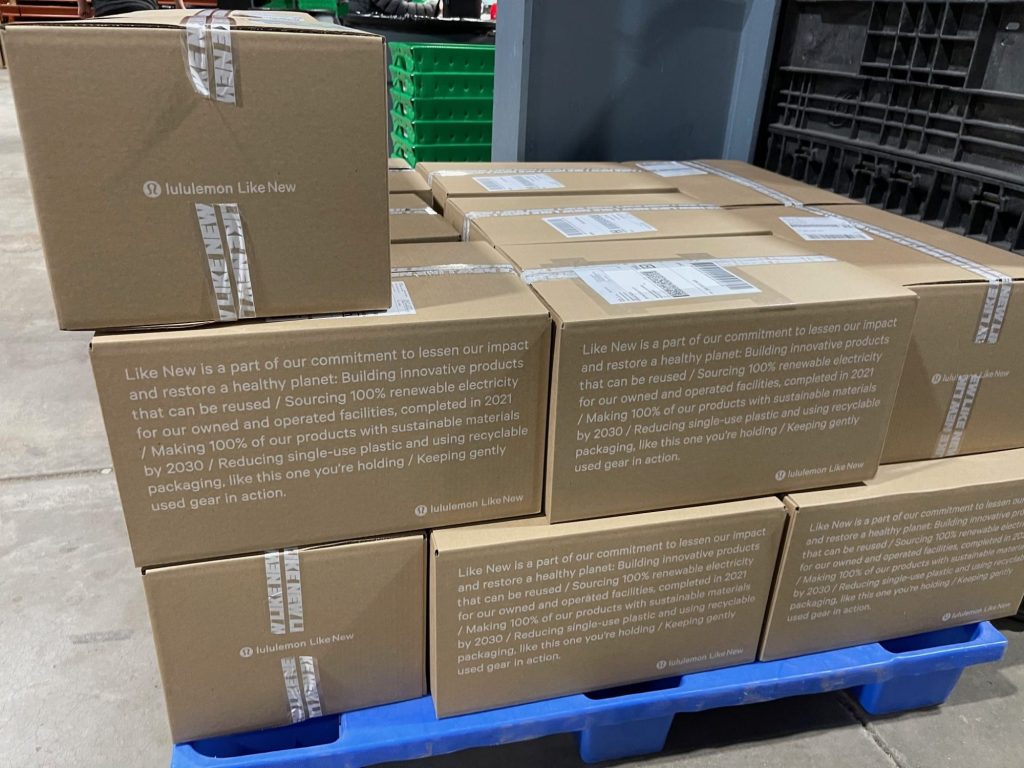
Lululemon Like New products ready to ship at cleaning and logistics company Tersus Solutions. Credit: Trellis Group / Elsa Wenzel
Source: Trellis Group / Elsa Wenzel

Meanwhile, Lululemon Like New branded resale program llaunched four years ago. Speck credits the heads of retail and innovation for spearheading that initiative.

During Speck’s tenure, Lululemon also engaged in multiple collaborations to advance climate progress across the apparel industry. These include the UN Charter for Climate Action; the Fashion Climate Fund, an Apparel Impact Institute project to drive down emissions in the industry’s supply chains; and Fashion for Good’s Sorting for Circularity USA effort to map textile waste.

Moving forward

One year ago, the Women’s Executive Network named her one of the top 100 most powerful women in Canada. “Play the long game, trust and invest in people, be true to yourself, invite bold vision and pragmatic action,” Speck said around that time.

Her undefined next steps include “adventuring on this beautiful planet beyond the boardroom, while continuing to contribute through thought leadership and mentorship before starting new impact endeavors.”

Likewise, it’s unknown who will fill her shoes at Lululemon as its 2030 materials innovation targets and increasingly challenging net-zero climate goal for 2050 near.

The post Lululemon’s global sustainability leader departs appeared first on Trellis.

Send news about sustainability leadership roles, promotions and departures to [email protected].

Inter IKEA Group, which makes the wide range of home goods sold in IKEA stores, has officially named the former head of its textile supply chain strategy as its new chief sustainability officer.

Lena Julle, who has been with IKEA for more than 30 years, had been acting CSO since September 2024, when Pär Stenmark stepped aside to prepare for a new, as-yet-undeclared, role within the company. 

Julle’s permanent appointment became effective on May 1, after nearly two years of her being groomed for the position. Most recently, as the sustainability manager for IKEA Range, maker of the company’s stoves and ovens, Julle was involved in shaping the division’s burgeoning circular economy practices. Prior to that, she managed supply chain operations for the textiles division for six years.  

“With her leadership and deep knowledge of IKEA, Lena has continued our journey to be more sustainable in everything we do, said Inter IKEA CEO Jon Abrahamsson Ring. “As Acting Chief Sustainability Officer, she’s already made strong contributions in our journey towards net zero and further developed the overall IKEA sustainability agenda.”

IKEA’s science-based targets include a goal to cut its climate footprint in half across all three emissions scopes by 2030, based on a 2016 baseline. The company reported a cumulative reduction of 28 percent as of the fiscal year that ended Aug. 31, 2024.

One of the thorniest challenges in delivering that 2030 commitment is reducing the impact of raw materials and extraction, which accounted for 52 percent of IKEA’s footprint in 2024. Textiles and “comfort materials” such as foam used to stuff sofas are the third biggest chunk in that category after metals and wood. Julle’s experience with that supply chain will be invaluable in finding alternative sources and increasing the percentage of recycled content used in IKEA manufacturing.

“Creating smart, well-designed, functional products for everyday use at home, based on our life-at-home expertise, while making steady progress on our sustainability agenda, presents a tremendous opportunity,” she said.

The post IKEA taps textiles leader as new CSO appeared first on Trellis.

Send news about sustainability leadership roles, promotions and departures to [email protected].

Inter IKEA Group, which makes the wide range of home goods sold in IKEA stores, has officially named the former head of its textile supply chain strategy as its new chief sustainability officer.

Lena Julle, who has been with IKEA for more than 30 years, had been acting CSO since September, when Pär Stenmark stepped aside to prepare for a new, as-yet-undeclared, role within the company. 

Julle’s permanent appointment became effective May 1, after nearly two years of her being readied for the position. Most recently, as the sustainability manager for IKEA Range, maker of the company’s stoves and ovens, Julle was involved in shaping the division’s burgeoning circular economy practices. Prior to that, she managed supply chain operations for the textiles division for six years.  

“With her leadership and deep knowledge of IKEA, Lena has continued our journey to be more sustainable in everything we do,” said Inter IKEA CEO Jon Abrahamsson Ring. “As acting chief sustainability officer, she’s already made strong contributions in our journey towards net zero and further developed the overall IKEA sustainability agenda.”

IKEA’s science-based targets include a goal to cut its climate footprint in half across all three emissions scopes by 2030, based on a 2016 baseline. The company reported a cumulative reduction of 28 percent as of the fiscal year that ended August 31.

One of the thorniest challenges in delivering that 2030 commitment is reducing the impact of raw materials and extraction, which accounted for 52 percent of IKEA’s footprint in 2024. Textiles and “comfort materials” such as foam used to stuff sofas are the third biggest chunk in that category after metals and wood. Julle’s experience with that supply chain will be invaluable in finding alternative sources and increasing the percentage of recycled content used in IKEA manufacturing.

“Creating smart, well-designed, functional products for everyday use at home, based on our life-at-home expertise, while making steady progress on our sustainability agenda, presents a tremendous opportunity,” Julle said.

[The sustainability agenda is broad, deep and changing fast. Join Trellis Network to gain the powerful peer network you need to drive more impact.]

The post IKEA taps former textiles leader as new CSO appeared first on Trellis.

When you think of the biggest polluters of greenhouse gas emissions, health care may not be top of mind. But the health care system is responsible for 8.5 percent of GHGs in the U.S. and about 5 percent globally. 

At the same time, health care systems are increasingly affected by the climate change impacts of those outsized emissions. This ranges from facilities being hit with extreme weather and volatile energy prices to patients experiencing heat-related ailments or new illnesses brought on by changing disease vectors from a warming climate. Health systems are also chronically underfunded, and the current administration’s reduction of health care funding will exacerbate the problem. 

Fortunately, there are opportunities for health care players of all sizes and stages to reduce their costs through decarbonization – and also contribute to reducing the negative societal and health impacts of emissions.

Decarbonization creates value for health care systems in many ways. The NYU Stern Center for Sustainable Business (CSB) conducted a Return on Sustainability Investment (ROSI) analysis to understand the financial value drivers of decarbonization strategies in health care. Working with the Commonwealth Fund, Health Care Without Harm and the National Association of Medicine’s Health Care Supply Chain Working Group, we cataloged and prioritized decarbonization strategies that can drive financial improvement for health care delivery systems. These key strategies include energy management, transportation optimization, building design and maintenance, sustainable sourcing, food service optimization, low-emissions clinical care, waste reduction and responsible investments. The examples below illustrate how these strategies can drive value for the health care industry.

Building design and energy management

CSB examined the decarbonization of building facilities for a Midwest hospital system and found that an energy retrofit approach of existing facilities would net $1 per square foot. A net-zero building design for new construction would net the building $2 per square foot—helping defray the cost of investment and providing savings over time. 

Transportation optimization

When CSB explored last-mile delivery optimization for a health care solutions company, it discovered that by maximizing pharmaceutical deliveries for a single route within a region, the company could reduce fuel emissions and save $254,000 annually. Anecdotally, the firm also discovered staffing efficiencies by consolidating incoming deliveries.

In another example, Kaiser Permanente’s Richmond Medical Center implemented a microgrid that connects renewable energy and battery storage to a pre-existing, diesel-fueled backup power system. It has the potential to save as much as $394,000 per year.

Waste reduction through circularity

Medical facilities generate significant waste through reliance on single-use, disposable products. CSB explored the benefits of applying a circular approach in a hospital system, designing a program to incorporate reprocessed medical devices into their procurement process. An initial cost of half a million dollars led to $3.5 million in annual savings. 

The University of Minnesota Medical Center reformulated operating room (OR) kits to reduce disposable products deemed unnecessary as part of individual kits. Across two campuses, reformulation of OR kits diverted 10,553 pounds of waste per year, saving $116,215 annually on purchasing unnecessary products and paying for waste disposal.

Another added benefit to circularity in hospitals is that it can insulate the hospital and their suppliers from tariffs, because they will need fewer imported parts and materials.

Lower-emissions clinical care 

With 80 percent of health care emissions coming from Scope 3, decarbonization in the supply chain is especially important. For the pharmaceutical industry, we found that reformulating a product using a green chemistry approach reduced water, chemicals, energy and waste by approximately 80 percent across the board for one company, with a cost savings of approximately $1.5 million per 100 metric tons of product. 

Category Savings per 100 metric tonne
Avoided carbon emission fees ($5/ton) $240,000
Reduced water use $766,000
Reduced industrial waste disposal $364,000
Reduced electricity cost $177,000
Total savings $1,547,000

In addition, our landscape analysis of direct emissions for health care delivery systems found anesthetics to be a significant contributor to hospital GHG footprints, with estimates of up to 40 percent. Mitigating the use of certain volatile anesthetic gases such as desflurane and nitrous oxide in favor of lower-emitting options resulted in a 78 percent reduction in emissions and $2.4 million in savings annually for one Providence-based provider.

5 steps to take

Hospitals early in their decarbonization journey may wonder where to start. Some decarbonization steps, such as energy-efficiency projects, can be taken with a relatively short payback period and lower initial investment. The savings from these projects can then support funding for other more intensive projects. To begin, companies can: 

  • Benchmark Scope 1, 2 and 3 emissions using the Greenhouse Gas Protocol or other standardized tools.
  • Identify the greatest area of GHG reduction, likely strategies to reduce emissions and low-hanging fruit from a financial perspective. Energy efficiency through conservation, management, circularity and waste reduction should be the first step, followed by renewable energy sourcing.
  • Create a roadmap for investment: choose an initial project, perhaps a lower investment and quicker payback one like energy management to complete first.
  • Track financial returns and leverage benefits from the completed project to build buy-in and use savings to finance higher impact, longer term, or more intensive sustainability strategies.
  • Rinse and repeat.

Decarbonization in health care is good for the planet, patients, and the bottom line. By prioritizing decarbonization and other sustainability initiatives, professionals can help the health care system be more resilient in the face of political, economic and climate shocks.

[Connect with more than 3,500 professionals decarbonizing and future-proofing their organizations and supply chains through climate technologies at VERGE, Oct. 28-30, San Jose.]

The post Work in health care? These 4 strategies can help you cut costs and carbon content  appeared first on Trellis.

Outdoor retailer REI Co-op kept 90 percent of the discarded packaging and other waste generated at its 190-plus stores, distribution centers and warehouses out of landfills or incinerators in 2024 — delivering early on a 2025 goal and edging out other national chains including Walmart and Target that have made similar commitments.

REI’s long-term vision is to become a zero-waste operation, although the 24 million-member co-operative hasn’t published a target date for its ambition.  

“Being literally zero waste — i.e. 100 percent diversion from landfill — is an aspiration,” said Andrew Dempsey, director of climate at Seattle-based REI, which logged $3.76 billion in sales for 2024. “We have no timeframe on this, but we hope to improve diversion across our stores by 0.5 percent this year.”

REI recycled or composted 78 percent of its waste in 2020, and the company reached 86 percent in 2023. It’s the first high-profile retailer to report the 90 percent mark, a claim that was audited and independently verified. The disclosure was made in REI’s latest ESG report, published May 8. 

Two larger retail organizations that have made zero waste a top priority are still shy of their goals, as of their latest environmental impact progress reports. 

Target, aiming for zero waste by 2030, was at 85 percent as of July 2024. Walmart’s diversion rate for 2023 was 83.5 percent. The world’s largest retailer by revenue was aiming for 90 percent diversion in the U.S., Mexico and Canada by the end of 2025, but acknowledged in February that it will fall short of the mark.

Reducing waste plays directly into retailers’ Scope 3 emissions reduction commitments, specifically at the end-of-use stage, Dempsey said. It also gives the REI workforce a very tangible way to contribute to the company’s climate goals.

“Our employees are absolute champions of this work across our distribution centers and our retail fleet,” Dempsey said. “They touch and feel [waste] every day. It makes the concept tangible in a way that metric tons of carbon does not.” 

Creative ways to eliminate single-use plastic

Plastic packaging makes up REI’s biggest waste stream, and Dempsey outlined the ways that the retailer drives down plastic use across its operations and gets rid of what winds up in its facilities:

Trex partnership 

REI’s relationship with Virginia-based wood alternative manufacturer has turned 2.5 million pounds of polyethylene plastic film into decking. REI gets paid for sending the baled material to Trex; it won’t say how much.

Packaging policy

REI’s private-label apparel is rolled and bundled with raffia ties that can be composted. It asks brands to eliminate single-use packages and charges a $0.01, per-unit fee for anything that doesn’t comply. One sticking point of this policy is that it requires changes to distribution center processes to protect products from becoming soiled.

“A lot of it comes down to simply cleanliness of conveyor belts that are moving the product around within your distribution center, making sure that your staff understands why it’s not in plastic and really what the intention is there,” Dempsey said. 

The fee goes toward the extra back-end work required to bale different types of plastic so that REI can send it out to be more readily recycled. “What we really want to do is work with these brand partners to design that plastic out of the system,” Dempsey said.

New best practices

Some REI facilities use the Total Resource Use and Efficiency (TRUE) certification program created by the U.S. Green Building Council, which recognizes processes that contribute to zero waste. Three distribution centers are certified, and a fourth is awaiting recognition.

Circular economy boosters

In 2024, REI sold almost 1.4 million items through its Re/Supply program, which markets used gear. The business has doubled since 2019. The most popular items are backpacks, sleeping bags and tents. Camping items represent approximately 20 percent of REI’s overall sales.

The resale business reduces waste at a product’s end-of-use stage. The company estimates that the emissions associated with preparing these items for resale are about half of those associated with the production of a new edition.

“Keeping gear in use longer is the best thing you can do, both from a climate standpoint and then obviously from a waste standpoint,” Dempsey said.

Recent additions to REI’s takeback program include an initiative to collect and recycle electric bicycle batteries. The retailer collects other items that are hard to process, such as bike tires and tubes, and it’s prioritizing refillable fuel canisters. 

REI is also sourcing more recycled materials for its products: approximately 52 percent of the polyester and 45 percent of the nylon it sources, according to the brand’s latest impact report. And it’s making some running apparel from a new material made by LanzaTech, which turns industrial waste gases, including carbon dioxide, into low-carbon yarn.

The post How REI reached a key zero-waste milestone before Target and Walmart appeared first on Trellis.